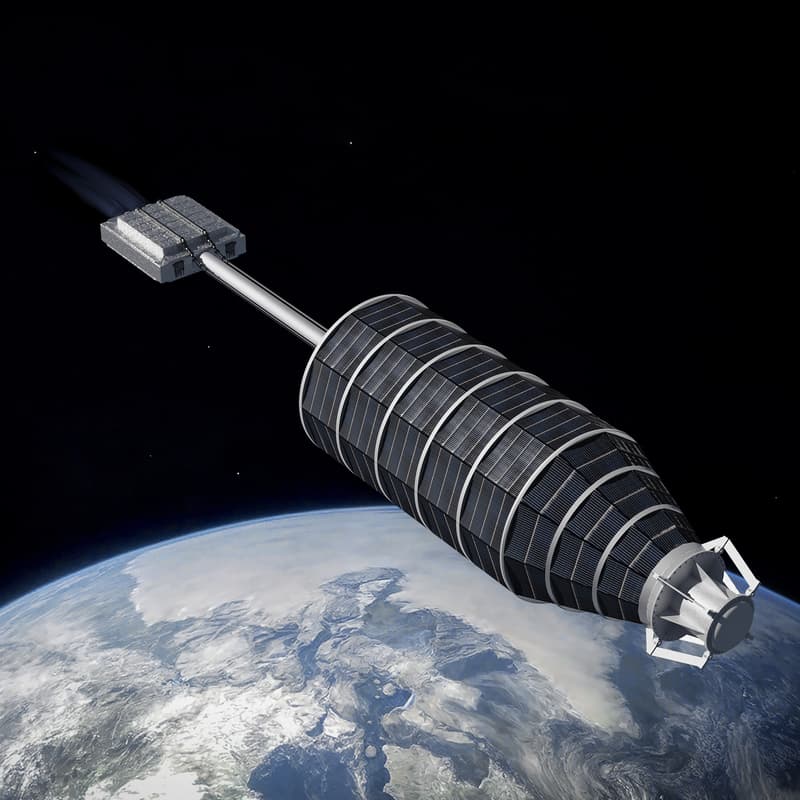

The Nuclear NASA Era: Space Reactors, Strategy, and the Future of the Moon
“We are entering the ‘Nuclear NASA-era,’” NASA Administrator Jared Isaacman said in October 2026. President Trump’s December 2025 Executive Order on *Ensuring American Space Superiority directs NASA to develop a launch-ready lunar surface reactor by 2030, advancing a growing U.S. push to establish nuclear capabilities beyond Earth.
What will the nuclear era of space exploration look like—and what will it take to make it a reality?
Join the Stanford Law School Space Law Society for a conversation with Ronny Breslavsky, Space Mission Architect at Antares Nuclear, on space nuclear technology and the future of lunar infrastructure. We will explore the potential applications of nuclear energy in space, from powering lunar operations to enabling longer-duration missions, and examine the technical, safety, and reliability challenges that stand between today’s designs and tomorrow’s deployments.
The conversation will also examine the policy and regulatory landscape that shape this emerging field. How are NASA, the Department of Energy, and the Department of Defense approaching space nuclear capabilities? What role will private companies play in developing the lunar economy, establishing industry standards, and shaping norms for future activity on the Moon? And how confident should we be in the ambitious timelines driving the current space race?
Bringing together engineering, national security, commercial development, and space law, this event offers students an opportunity to understand what’s powering American space exploration—and the legal and policy questions that will accompany it.
Join Virtually Here: https://stanford.zoom.us/j/94796106715?pwd=FHsFIOa2RmPP1YaZiJ9hnaAnLXUY2x.1
Ronny Breslavsky is a Space Mission Architect at Antares Nuclear, where he leads the development of mission architectures and advanced nuclear power systems for space applications. He has nearly two decades of aerospace engineering experience, previously holding engineering and leadership roles at Relativity Space and Northrop Grumman. His background spans space nuclear design and integration, aerodynamics, computational fluid dynamics, and launch vehicle development, including work on NASA’s James Webb Space Telescope. Ronny holds a B.S. in Aerospace Engineering from UCLA and an M.S. in Aeronautics and Astronautics from Stanford University.
All Stanford community members are welcome. No prior technical knowledge of nuclear energy or space systems is required.