From Archive to Exhibition: Making Place-Based Research Public
In this workshop, Elizabeth Patton and Erica Stein will present on their recent archival exhibitions and reflect on what it means to work with intimate and collective histories and the political potential of making these archives public. This session foregrounds the labor of assembling, interpreting, and making such archival materials public.
Picturing Mobility: Black Tourism and Leisure during the Jim Crow Era, presented by Elizabeth Patton.
Picturing Mobility explores what it meant to seek leisure and travel as a Black American during the Jim Crow era. The exhibition features snapshots and travel ephemera of Black leisure experiences primarily from the mid-Atlantic during the 1920s to 1960s. From beach outings to family road trips, these images offer glimpses into everyday moments of happiness, relaxation and community, challenging dominant narratives that define the era solely through restriction and struggle. Viewers are encouraged to reflect on the emotional power of these images of Black resistance and mobility. Patton’s presentation will reflect on what it means to work with community and family archives through counter-archival practices based on relationship-building, trust, and shared responsibility.
She will discuss her experience curating Picturing Mobility to examine how oral histories. family photographs, and home movies can be exhibited in ways that make these materials public while respecting issues of ownership, privacy, and consent.
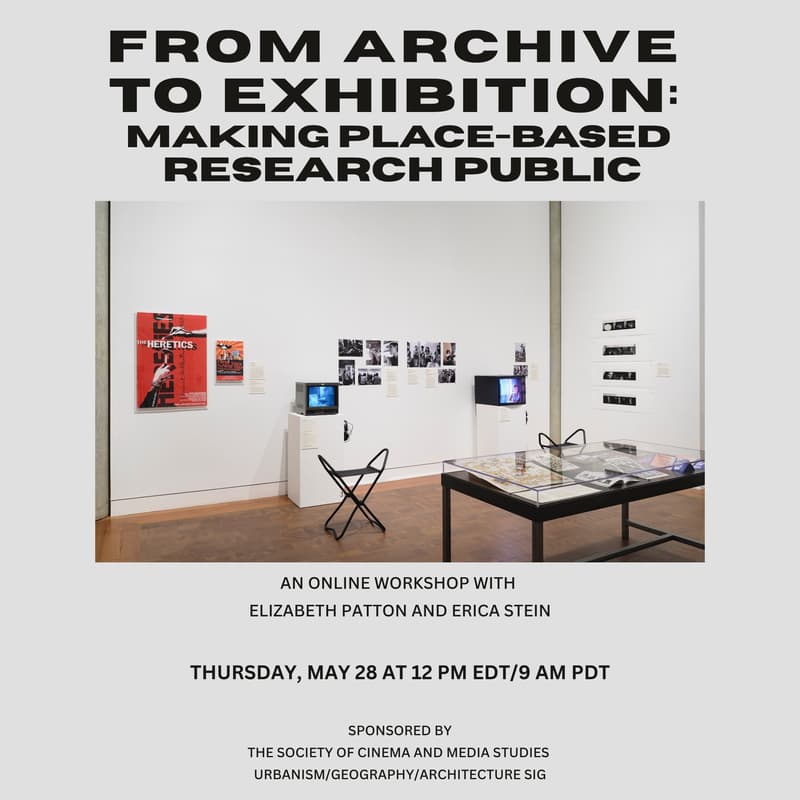
Women’s Work: Organizing New York Independent Film & Video, presented by Erica Stein.
Women’s work has historically referred to work that goes unnoticed and uncelebrated—keeping house, taking notes, planning events, making connections—often done in support of men. This exhibition reframes women’s work, showcasing and celebrating the organizing labor that enabled groundbreaking film, video, and community media collectives like Third World Newsreel, Paper Tiger Television, and Women Make Movies to pursue new forms of self expression and advocate for political change from the 1960s–1990s. This women’s work was done in support of other women, and often foregrounded images of women working in contexts from industrial laundries to sex work to activist marches. In addition to extended clips from the films, TV broadcasts, and videos themselves, the exhibition takes guests behind the scenes of independent media making through programming notes, DIY repair manuals, student and community planning documents, and other materials to tell the story of how media can be made and reach audiences outside the mainstream.