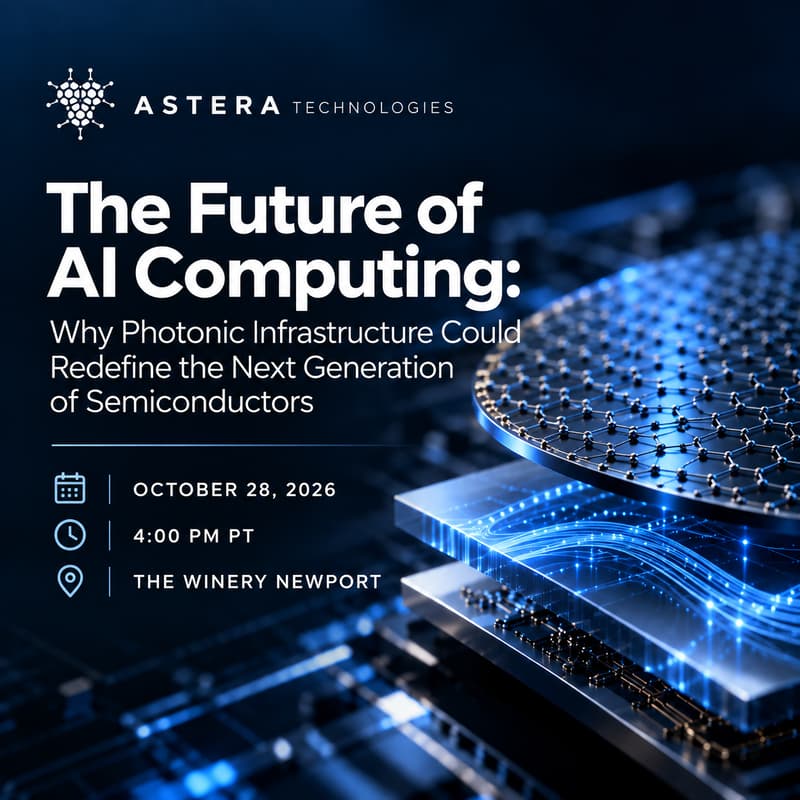

The Future of AI Computing: Why Photonic Infrastructure Could Redefine the Next Generation of Semiconductors
The Future of AI Computing
Why Photonic Infrastructure Could Redefine the Next Generation of Semiconductors
As AI workloads grow, so do the demands placed on power, cooling, and computing infrastructure. The semiconductor industry is increasingly looking beyond conventional electronics for ways to address these challenges.
Join Astera Technologies for an educational discussion exploring photonic computing, the advanced materials behind it, and what this shift could mean for the future of semiconductor infrastructure.
The Winery Newport
October 28, 2026
4:00 PM PT
The Challenge with Conventional Computing
As AI workloads grow, conventional computing faces increasing pressure from power consumption, heat generation, and cooling demands.
Adding more computing capacity can also mean adding more infrastructure to manage those constraints. This is driving interest in alternatives that could move and process information more efficiently, including photonic computing.
A Different Path for AI Computing
Photonic computing could provide a different path by using light to move and process information, potentially reducing some of the power, heat, and cooling demands associated with conventional computing.
But making that shift requires more than photonic processors. Advanced materials and supporting infrastructure will be critical to bringing photonic computing toward broader commercial use.
Join the Discussion
If you’d like to join Astera Technologies for an educational conversation about photonics, advanced materials, and the next generation of semiconductor infrastructure, complete the form below and we’ll send your event details.