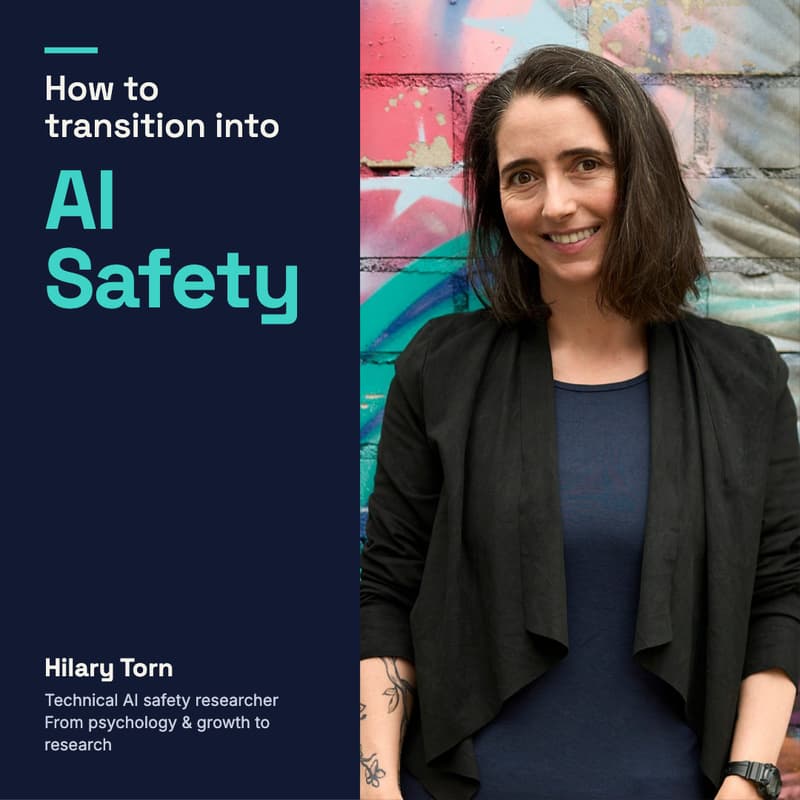
How to transition into AI Safety
AI is moving fast, and the field working to make it go well is short on people. The good news: you don’t need a PhD in machine learning to start contributing. The less-good news: the path in isn’t obvious.
This talk is a practical map for getting into AI safety from wherever you’re starting, whether you’re a software engineer, a researcher in another field, a policy person, a marketer, or simply someone who’s been reading about AI risk and wants to do something about it.
What we’ll cover
What AI safety actually is, and the main areas of work: technical research, governance and policy, field-building, and operations
The real pathways in, including fellowships, mentorship programs, independent research, grants, and courses, and who each one suits
How to build skills and a track record when you’re starting from zero
How to use the background you already have instead of starting over
Funding: how people support themselves during the transition
Common mistakes, and what I’d do differently
About the speaker
Hilary is a technical AI safety researcher based in Tallinn. She came into the field from an unusual direction: an undergraduate degree in psychology and a career in growth marketing, including time as Head of Growth at n8n. She’s now doing AI safety research full-time, funded by a grant from Coefficient Giving. Her work covers value drift in fine-tuned language models (PRISM fellowship), safety erosion from benign fine-tuning, and studying the behavior of AI agents. She’ll share the honest version of how the transition works.
Who should come
Anyone curious about working in AI safety, at any career stage, technical or not. No prior knowledge needed. Bring your questions; there will be plenty of time for Q&A.