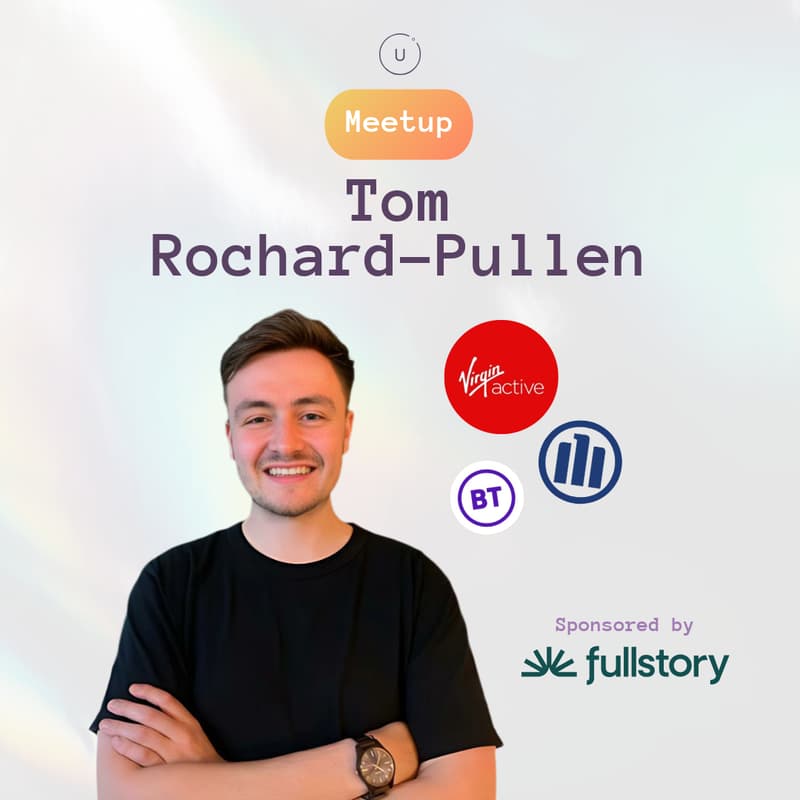

Meetup | The Self-Healing Funnel
Target Audience: Anyone who has ever said, “Why did nobody spot this sooner?”
Level: Intermediate
Analytics teams can easily fall into the common pitfall of running on a broken clock. A dashboard shows where you are bleeding users, someone notices it weeks later, a UX review gets scheduled, a hypothesis gets argued over, and eventually, maybe, a test ships. By then the moment, the traffic and the problem, has moved on.
In this session Tom explores what it would take to close that loop automatically. Using a funnel as the case study, he looks at what happens when detection, diagnosis, and hypothesis are accelerated, and how a continuous loop of noticing, diagnosing, and proposing fixes changes the speed of an analytics team's day to day work.
Drawing on MCP connectors, multimodal AI diagnosis, and the statistical guardrails needed to keep an automated system honest, this talk gives participants a concrete architecture for a self healing funnel, the failure modes to design around, and an honest look at how much of the analyst's job is left once the system can detect, diagnose, and prescribe the fix itself.
What You’ll Learn
Why the real bottleneck in experimentation is speed
How MCP connectors can wire funnel and session replay data directly into an AI diagnostic layer
The five stage loop: detect, diagnose, prescribe, execute, learn
What guardrails a self healing system needs so it doesn't confidently diagnose the wrong thing
Where human judgement has to stay in the loop, deliberately, even as the rest automates
Speaker
Tom Rochard-Pullen is currently the Global Head of Product Analytics at Virgin Active. Over the past decade, he has built analytics teams from the ground up, from working as a one-person analytics function and hiring teams at scrappy startups, to revitalising underused teams into strategic functions that executives rely on.
He has rebuilt tracking implementations more times than he would like to admit, led experimentation programmes, and spent his career turning “here’s a dashboard” into “here’s what you should do about it.”
Format
Interactive keynote
Open discussion
Reflection and practical takeaways
Networking with the local community
Sponsored by Fullstory
By registering, you acknowledge that you may receive follow-up communications from our sponsor, Fullstory.