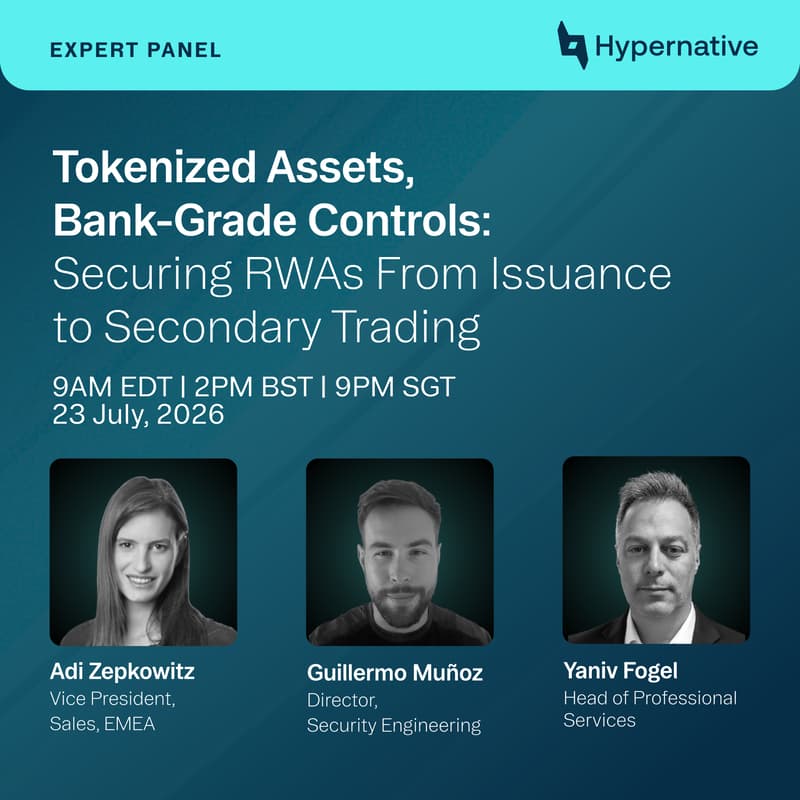

Tokenized Assets, Bank-Grade Controls: Securing RWAs From Issuance to Secondary Trading
Tokenized real-world assets have grown roughly fourfold in a year, and the institutions building them are the ones you'd expect: HSBC, Standard Chartered, BlackRock, and Franklin Templeton are all live or piloting today. The risk models these institutions bring assume decades of custody, audit and compliance discipline carry over onchain. They don't, not by default.
A valid signature only confirms who's allowed to act. It says nothing about what a specific mint, burn, whitelist change or contract upgrade should be allowed to do. That's a different question, asked transaction by transaction, and almost no institutional risk program is built to ask it.
In May, that gap cost real money. A compromised signer minted unbacked tokens against zero collateral on the minting contract of a MiCA-licensed stablecoin issuer. The signature was valid. Both of the issuer's tokens broke their peg.
In 45 minutes, we'll show you:
The pre-signature check that catches this before it clears, and exactly what it evaluates
Two real incidents, one attack and one internal error, caught by the same check
What to monitor once a transaction has already executed: oracle deviation, depeg, secondary market health
Where automated response ends and a human incident response team needs to take over
Who this is for:
Risk, compliance and digital asset teams at banks and financial institutions issuing or servicing tokenized bonds, treasuries, money market funds or private shares, or running a live tokenization platform.