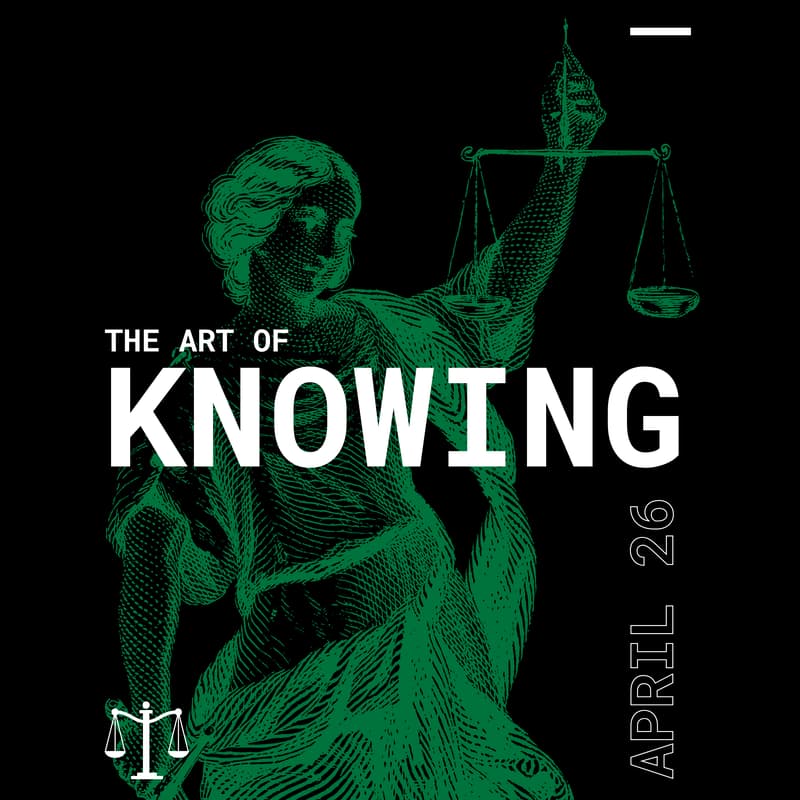

The Art of Knowing: Part 2
You did not need to have attended Part 1 to understand or participate in Part 2.
What's true, what's false, and how can we actually know anything today?
Most of us encounter more information daily than we did in an entire week back when we were in school, and many of us feel less capable than ever to make sense of that information.
This multi-part series, adapted from a course Bradley Mankoff taught at Loyola Marymount University, will arm you with the tools you need to regain confidence in the modern information landscape.
The second part of the series examines how bureaucrats and politicians use logical fallacies to shape public belief and justify decisions.
Questions to consider before attending:
What are the most common logical fallacies used in political and institutional messaging?
Why are these fallacies effective on large groups of people?
How can you identify when an argument is manipulating rather than informing?
What incentives do bureaucrats and politicians have to rely on flawed reasoning?
What tools can you use to think clearly and evaluate these arguments for yourself?
Your host
Bradley Mankoff, earned his Ph.D. at UCLA in Political Science, and taught many political sciences courses. He currently writes about digital censorship.