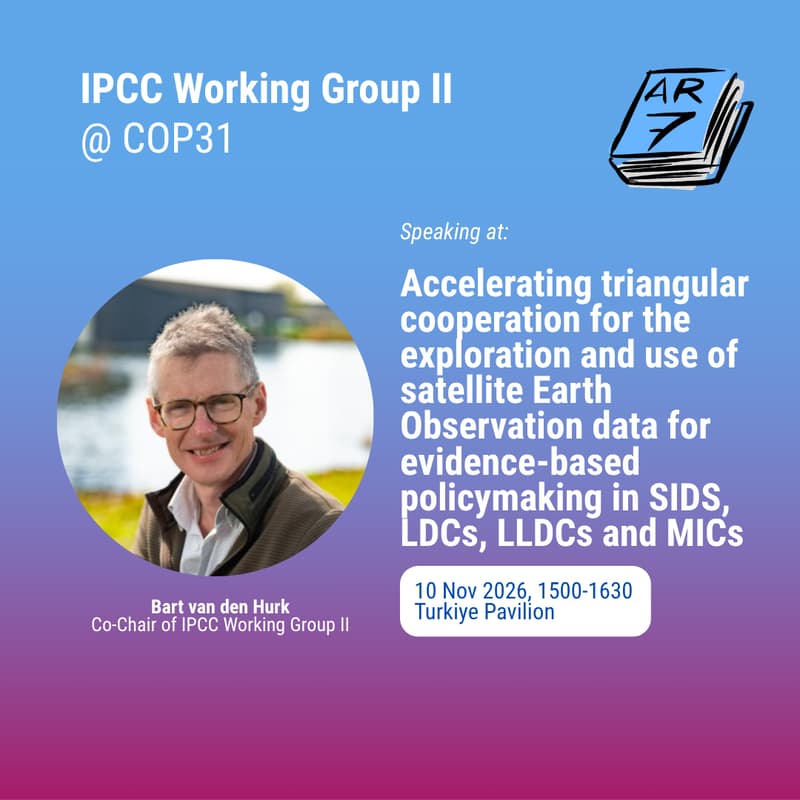

Accelerating triangular cooperation for the exploration and use of satellite Earth Observation data for evidence-based policymaking
As countries seek to accelerate climate action and Sustainable Development Goal implementation, stronger evidence, institutional capabilities and practical cooperation models are increasingly important for translating commitments into results.
These requirements are particularly significant for Small Island Developing States (SIDS), Least Developed Countries (LDCs) and Landlocked Developing Countries (LLDCs), which face structural vulnerabilities related to geography, climate exposure, resource constraints, infrastructure gaps and limited access to technical capabilities. Middle-income countries (MICs) can also contribute important experience, institutional capacity and solutions to cross-border learning and triangular cooperation.
Satellite Earth Observation (EO) provides timely and comparable information on climate risks, land, oceans, forests, agriculture, water resources, biodiversity, urbanization, infrastructure, disaster exposure and environmental change. Yet access to satellite data alone does not create development impact.
The event will also be linked to the UNFCCC Earth Information Day (EID) process, which provides an important science–policy interface for discussion of the state of the global climate system and developments in systematic observation