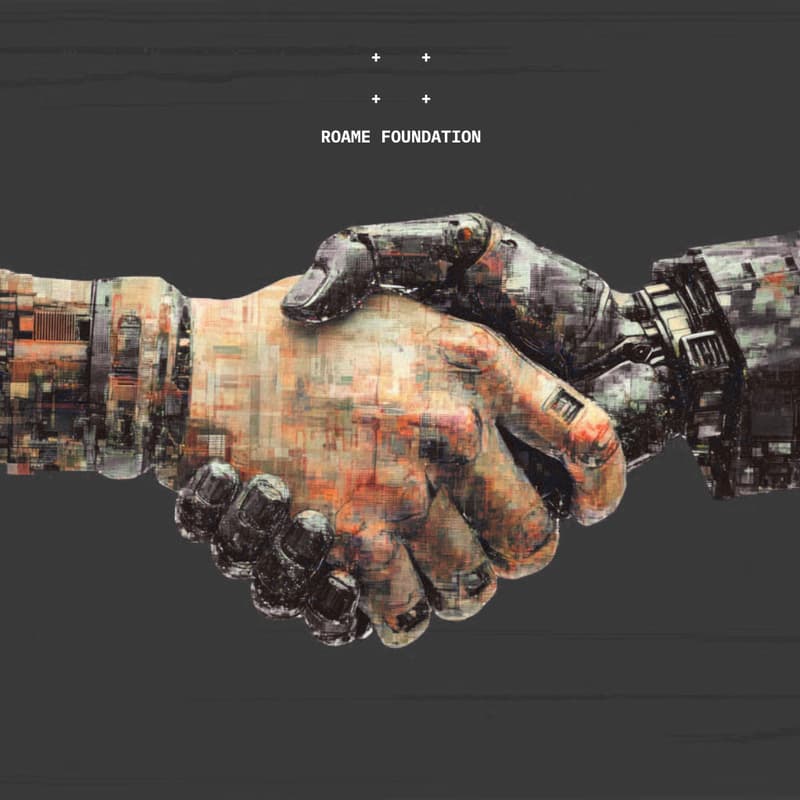

Physical AI: Manipulation and Manual Dexterity | Pulling the thread
You're invited to "Pulling the thread" - the next in a series of research dinners designed to facilitate an exchange of ideas across research and industry in frontier tech.
Hosted by the ROAME Foundation; a research collective including Fabric Ventures, Cambridge University, and AWS, this evening is designed for academics, researchers, industry experts, and startup founders shaping the future.
Physical AI: Manipulation and Manual Dexterity
Much of the physical economy is built around what people can do with their hands. From assembling components to preparing food, the work involves manipulating objects whose shape, stiffness, weight and friction vary, often in environments we cannot fully control. Extending machine capabilities into these settings could unlock a much broader range of useful work. It also puts manipulation and manual dexterity at the centre of the question of what physical intelligence actually requires.
Robots have long achieved extraordinary speed and precision in structured environments. Generalist robot models are now expanding the range of tasks that a single system can perform. But recognising an object and understanding an instruction are only part of the problem. Threading a cable, turning a screw or handling a delicate object requires managing contact: sensing forces, responding to slip, adjusting a grasp and recovering when an action does not go as expected. Some of the information needed to act only becomes available through the interaction itself.
This raises questions about how far the approaches driving progress elsewhere in AI will take us. Can dexterity emerge from larger models and more demonstrations, or does progress depend on different approaches to sensing, control and learning through interaction? How much can a robot learn from watching human hands, and what must it discover through its own?
Where should the boundary sit between a generalist model and fast, local feedback? When is touch essential, and how should tactile information be represented so that learning transfers between different hands and sensors? Can simulation capture enough of contact, friction and deformation to become the main source of training experience?
There are equally fundamental questions about the machines themselves. Which tasks justify the complexity of a humanlike hand over simpler grippers or specialised tools? How much of dexterity must a robot learn, and how much can be built into its hand through better materials and mechanical design?
Ultimately, what would demonstrate that we have built a broadly useful manipulation system? Is success best measured by the range of tasks it can complete, or by how long it can work, adapt and recover without human intervention?