Beyond LLMs: Will World Models Unlock the ChatGPT Moment for Robotics?
A beginner-friendly deep dive into world models, JEPA-style predictive architectures, and a live WorldForge robotics planning showcase.
LLMs gave AI a language interface. But will language alone be enough for robots, autonomous agents, and physical AI?
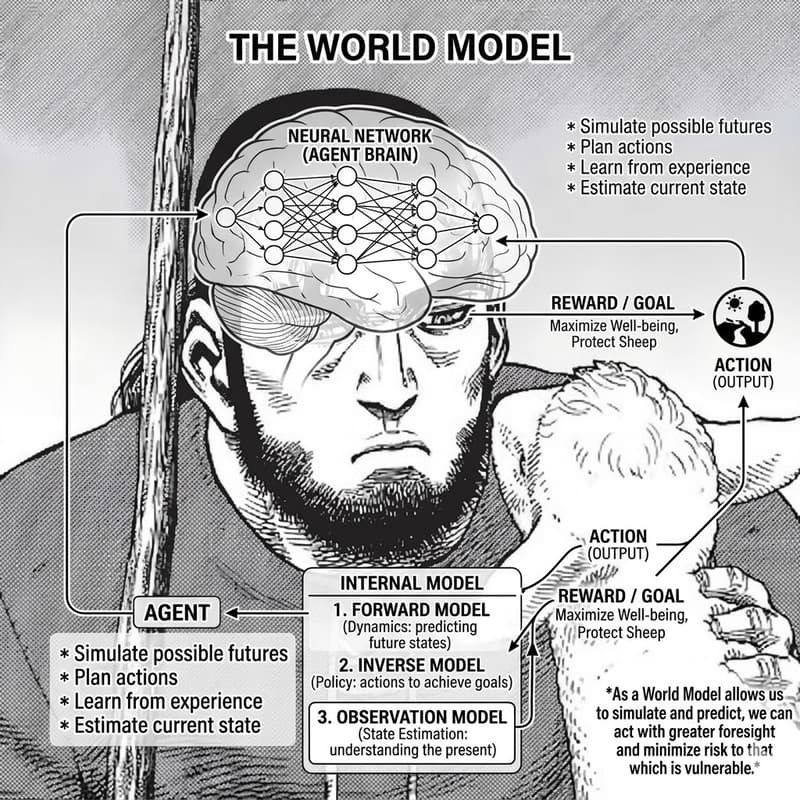
This session is a beginner-friendly introduction to world models: AI systems that try to predict how the world changes when actions are taken. We’ll unpack why many researchers believe this is one of the key missing pieces for physical intelligence, how world models differ from generative models like LLMs and video generators, and why architectures like JEPA are attracting serious attention for robotics and embodied AI.
The session will be split into three parts:
World Models: the intuition What is a world model? Why is the term so overloaded? What is the difference between predicting pixels, predicting latent representations, and predicting action-conditioned futures? We’ll build the mental model from zero.
WorldForge: making world-model workflows testable WorldForge is a Python integration layer for physical-AI workflows. It gives world-model providers, score models, embodied policies, and media generators explicit capability contracts, while adding planning, evaluation, benchmarks, diagnostics, local state, and CLI tools. The goal is to make mixed physical-AI workflows inspectable instead of hiding every model behind the same vague interface.
Robotics showcase demo We’ll walk through a WorldForge robotics replay demo that combines a Hugging Face LeRobot policy with a LeWorldModel cost-model checkpoint. The policy proposes candidate actions, the world model scores them, WorldForge selects the best action chunk, and the result is replayed locally. The demo does not control hardware; it demonstrates policy inference, score-model inference, candidate ranking, provider events, and local replay.
This is for developers, engineers, robotics builders, AI researchers, and curious technologists who want a clear map of where world models fit in the future of physical AI.
No prior knowledge of world models required. Expect concepts, intuition, practical architecture, a live demo, and an open discussion on what people could build or contribute next.
What Attendees Will Learn
• Why LLM-style generative architectures may not be enough for physical intelligence. • What makes a model a “world model” instead of just a video generator or simulator. • Why action-conditioned prediction matters for robotics. • The difference between generative world models and JEPA-style predictive architectures. • How WorldForge composes policies, score models, world models, planning, replay, and diagnostics. • How the robotics showcase makes the policy-plus-world-model loop visible through candidate ranking and tabletop replay