
Talk: From Action to Archive with Robert Nilsson Mohammadi
From Action to Archive: Aktion Samtal and Urban Struggle in Sweden’s Long 1968
At the end of the 1960s, the group Aktion Samtal (Action Dialogue) was formed by pedagogues, set designers, artists, and architects in Stockholm, Sweden. Inspired by the Danish artist Palle Nielsen’s transformation of the then newly established contemporary art institution Moderna Museet into an adventure playground, the group engaged with urban space from a children’s perspective. Their actions addressed living conditions and forms of sociability in some of the newly built working-class suburbs, which they understood as alienating environments bound up with the reproduction of capitalist social relations. Soon, however, the group decided to stop staging actions of its own and instead began documenting and connecting experiences of urban struggle. In this transition, the group changed its name to Arkiv Samtal (Archive Dialogue).
Well into the 1970s, Arkiv Samtal was active in connecting people and groups across Sweden, hosting summer institutes at its commune, Storsand, in the province of Dalarna, while building an expanding archive. Members of Arkiv Samtal played quiet but significant roles as conversation partners in some of the historically well-known social struggles of the period, including the miners’ strike of 1969–70 and the seamstresses’ strike a few years later.
Although central to the alternative and New Left movements of Sweden’s long 1968, the group’s history remains largely untold. This talk begins to entangle this history from the vantage point of a local archive that developed in the southern Swedish city of Malmö in the early 1970s, influencing grassroots efforts to preserve the built environment and social life of several of the city’s neighbourhoods. It asks whether the right to the city might also be understood as a right to the archive, and what it means to inherit an archive that offers a historiographical view onto the children’s perspective and the ludic city of the 1960s.
SPEAKER:
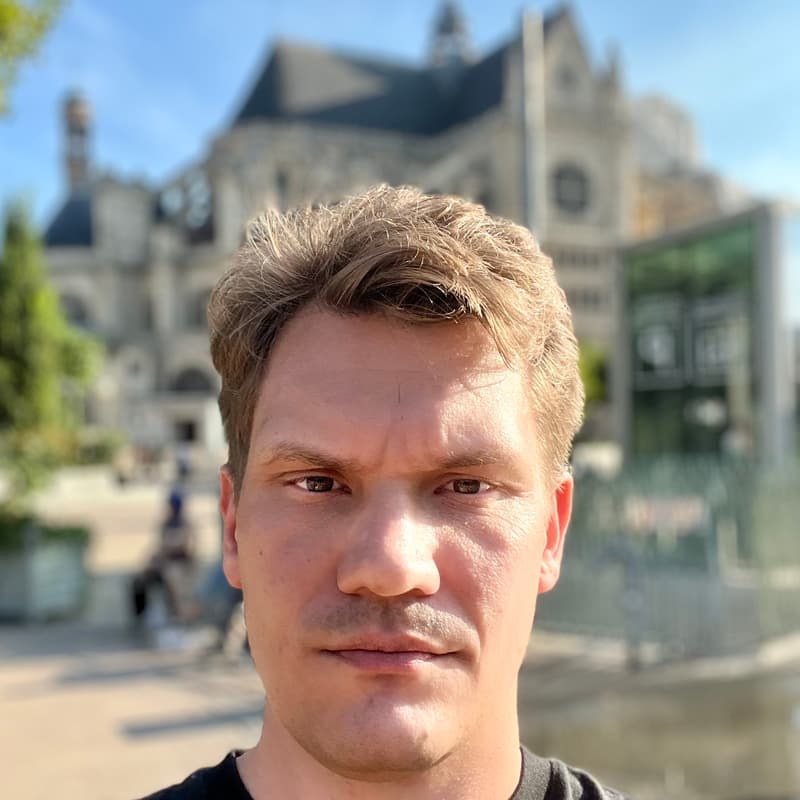
Robert Nilsson Mohammadi is a historian and Senior Lecturer at Malmö University and Research Coordinator for Urban Humanities at the Institute for Urban Research. His research brings together cultural memory studies, urban humanities, and public humanities, with a particular focus on memory, monuments, and the city. His current work examines the afterlives of far-right racist violence and explores how cultural production and spatial practices can contribute to reparative forms of remembering. A second strand of his research concerns participation, shared authority, and the conditions for just co-production of culture and knowledge, including through community art, community archives, and other forms of collaborative urban practice.
This talk is part of the Artistic Reading of the Archive Project implemented by Kulturrummet with the support of Kulturförvaltningen, Helsingborgs Stad