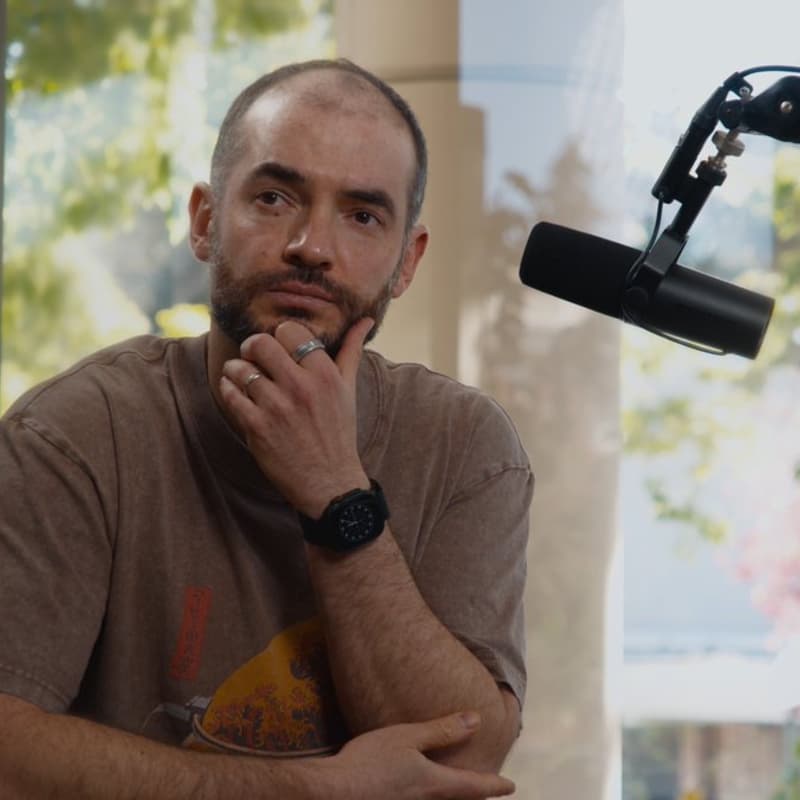

Podcast Discussion: Ilya Sutskever on Superintelligence
Let's discuss a podcast episode on Ilya Sutskever's view on superintelligence, the problems with pre-training, how to improve the generalization of AI models, and how to ensure AGI goes well.
Here is how it works:
[Optional] Prior to the event: Listen to the following Podcast Episode (during your commute or workout). Any of the following link works):
YouTube Link: https://www.youtube.com/watch?v=aR20FWCCjAs
Apple podcast Link: https://podcasts.apple.com/us/podcast/ilya-sutskever-were-moving-from-the-age-of-scaling/id1516093381?i=1000738363711
Spotify podcast link: https://open.spotify.com/episode/7naOOba8SwiUNobGz8mQEL?si=39dd68f346ea4d49&nd=1&dlsi=79fff6d528ce4dff
During the event: We will break out into small groups (max 6 people per group).
After the event: optional dinner & happy hour for further discussions.
Discussion Questions:
Models still lack the robust, sample-efficient generalization capabilities of humans. What biological learning principles are we missing that allow for such rapid adaptation?
Emotions function as biological value functions that efficiently guide complex decision-making. How might we encode similar intuitive "feelings" into AI to improve reasoning efficiency?
High benchmark scores often mask a lack of basic reliability and judgment. How do we move beyond static metrics to measure true "taste" and consistency?
True intelligence requires evolving beyond frozen pre-training to learn continually on the job. What architectural shifts are needed to enable models to learn dynamically like professionals?
Long-term safety may depend on aligning AI to care about all sentient life. How can we mathematically define "sentience" to serve as a robust alignment target?
Group Mission
Deep Discussions for Bold Innovators.
👥 Who should join
AI practitioners, startup founders, students, and researchers curious about AI’s development and impact.
Community Ground Rules
To provide an enjoyable experience for fellow participants, here are three ground rules during discussion events:
Step up and step back. (If you feel that you’ve been talking too much, step back to listen more. If you feel that you’ve been relatively quiet, step up to share your perspective or ask a question)
Listen to understand, not to respond.
Be open-minded and value differences.