
Who pays for Pollination?
Investing in the Living Systems That Make Food Possible
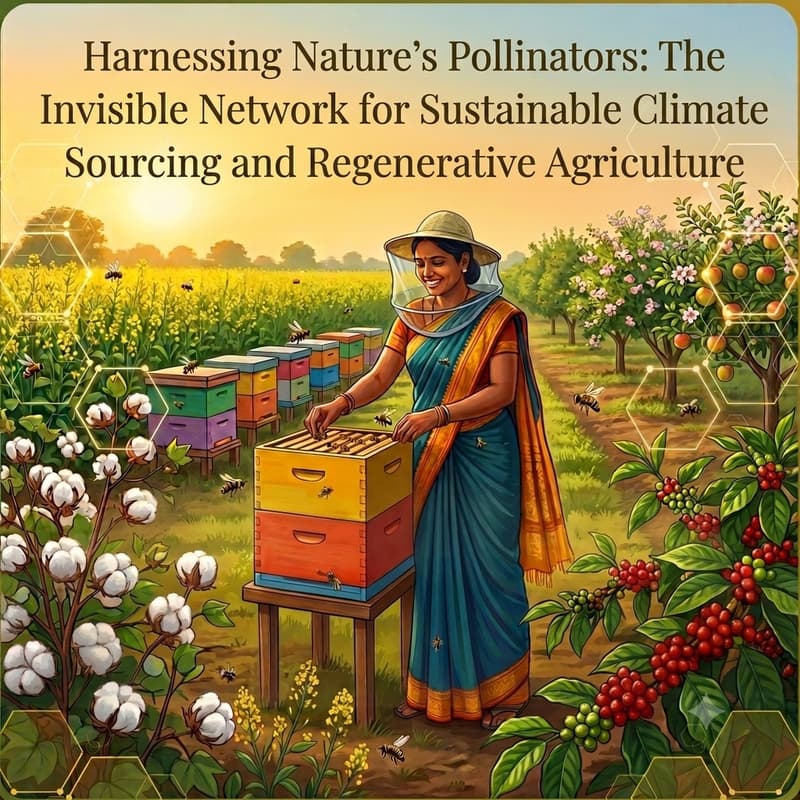
When managed bee-pollination is deployed into a spice, oilseed, cotton, or coffee supply chain, yield improves in verifiable, measurable ways: more seeds per pod, heavier seed weight, higher essential oil content. That's a direct financial upside for the brands sourcing those crops. Yet there's no established way for that value to actually reach the person making it possible, the woman who owns and tends the hive.
This session uses pollination as a real, measurable test case for a bigger question the regenerative agriculture world keeps circling but rarely resolves: as this value becomes easier to quantify, what would it actually take to build a market around it, sourcing premiums, shared costs, insurance-linked products, blended finance? We don't have this figured out, and that's the point. We want to think it through with the people who'd actually be part of making it work.
This isn't a panel. It's a small, working conversation grounded in real experience, training rural and tribal women as scientific beekeepers across India, paired with people who understand sourcing, finance, and supply chains from the other side. We want to leave with at least one idea worth piloting.
Conveners
Monika Shukla, Co-Founder, Humble Bee
Gerry Rodriguez, U.S. Head of Brand Purpose & Impact, Edelman
Vikash Kumar Sinha, Global Lead, Climate Change & Sustainability Practice, MicroSave Consulting
Fabia Bromovsky, Executive Director & Global Farm Metric Director, Sustainable Food Trust
Other members- to be confirmed
Who this is for
A small, closed working room of: sustainable sourcing leads, food-systems actors, perspectives from multilaterals and grassroots organisations and enthusiasts of regen agri, food systems, biodiversity, NbS and more!
What you'll get out of it
A concrete, measurable business case for investing in nature, not just an ethical one
Real perspectives from across the value chain, field to boardroom
A chance to shape or join an actual pilot idea