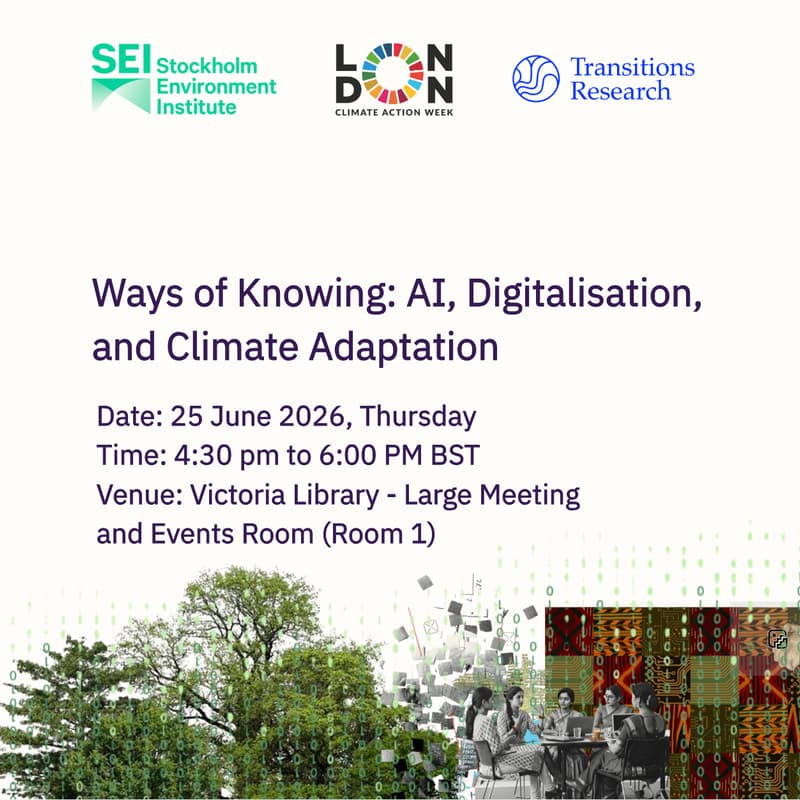
Ways of Knowing: AI, Digitalisation, and Climate Adaptation
Climate adaptation is increasingly shaped by digital technologies. Early warning systems, climate risk maps, remote sensing, decision-support platforms, and emerging AI-enabled tools are becoming part of how governments, researchers, practitioners, and communities understand and respond to climate risks. These technologies promise new forms of visibility, prediction, coordination, and learning. At the same time, adaptation remains a deeply contextual process, shaped by local knowledge, institutional capacities, social relationships, governance arrangements, and lived experience.
As digital technologies become more embedded within adaptation practice, how are decisions influenced by different forms of knowledge? How do digital tools interact with existing practices, institutions, and ways of understanding risk? What happens when information generated through models, algorithms, and platforms encounters place-based knowledge developed through experience? How do different actors perceive the opportunities, limitations, and trade-offs associated with digital adaptation interventions? And are the challenges associated with AI fundamentally new, or do they reflect longstanding questions around knowledge production, trust, governance, and decision-making in adaptation?
Drawing on real-world case studies from the weADAPT platform and wider adaptation practice, this interactive session explores how communities, governments, researchers, funders, civil society organisations, and technology developers experience and respond to digital technologies for climate adaptation. The session is built around a facilitated Perspective Swap exercise, through which participants will examine how priorities, concerns, incentives, and understandings of success vary across different actors involved in adaptation.
Event by:
SEI Team: Alice Chautard, Shruthi Krishnamoorthy & Sukaina Bharwani.
TR Team: Vikrom Mathur, Bharath Haridas, Angelina Chamuah & Shraddha More