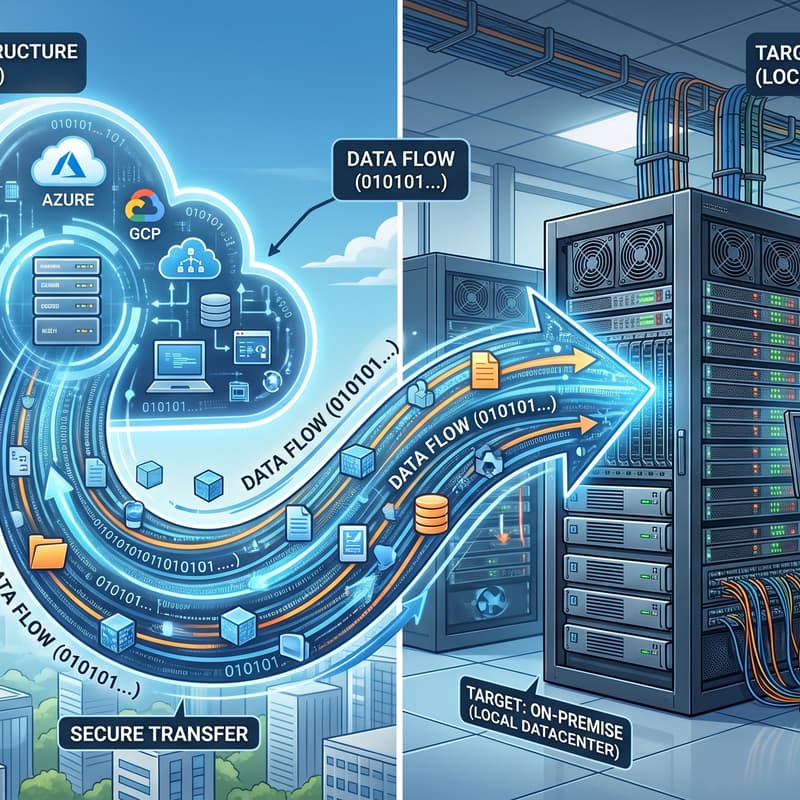

HowTo: Migrate cloud to cloud
Migrating from a major hyperscaler to a smaller European cloud provider is a strategic move often driven by data sovereignty, cost predictability, and avoiding vendor lock-in.
Key Considerations
Service Mapping: Smaller providers often focus on robust Infrastructure as a Service (IaaS) rather than specialized managed services. You must map your current setup to open-source or cloud-native alternatives.
Data Sovereignty & Compliance: Ensure the new provider meets strict GDPR and local European regulations, which is typically a primary advantage of this move.
Network and Egress Costs: Calculate the bandwidth costs of moving your data out of the large provider and the ingress/egress models of the new European provider.
Operational Model: Be prepared to take on more operational responsibility. Without hyperscaler managed services, your team might need to manage their own databases, message queues, and Kubernetes clusters.
Potential Challenges
Vendor Lock-In: Proprietary tools (e.g., AWS DynamoDB, Azure Functions) rarely have direct 1:1 equivalents on smaller clouds. Refactoring is often required.
Skill Gaps: Your team may be certified in specific hyperscaler ecosystems and will need time to adapt to generic, open-source-driven infrastructure.
Performance Parity: Smaller providers might have different hardware specs, network latency, or global CDN reach.
Migration Downtime: Moving large volumes of stateful data across regions and providers requires careful synchronization to minimize downtime.
What Can Be Left Behind?
Proprietary Managed Services: Leave behind vendor-specific tools in favor of containerized workloads (like Docker/Kubernetes) that are cloud-agnostic.
Bloat and Unused Resources: Migration is the perfect time to deprecate legacy applications, delete orphaned data, and shut down idle development environments.
Cold Data: Massive amounts of historical data can be archived locally or left in cheap, long-term cold storage rather than migrating it to active premium storage.
We are ready to kick off this migration journey. Which specific workload, database, or architectural layer would you like to evaluate and move first?