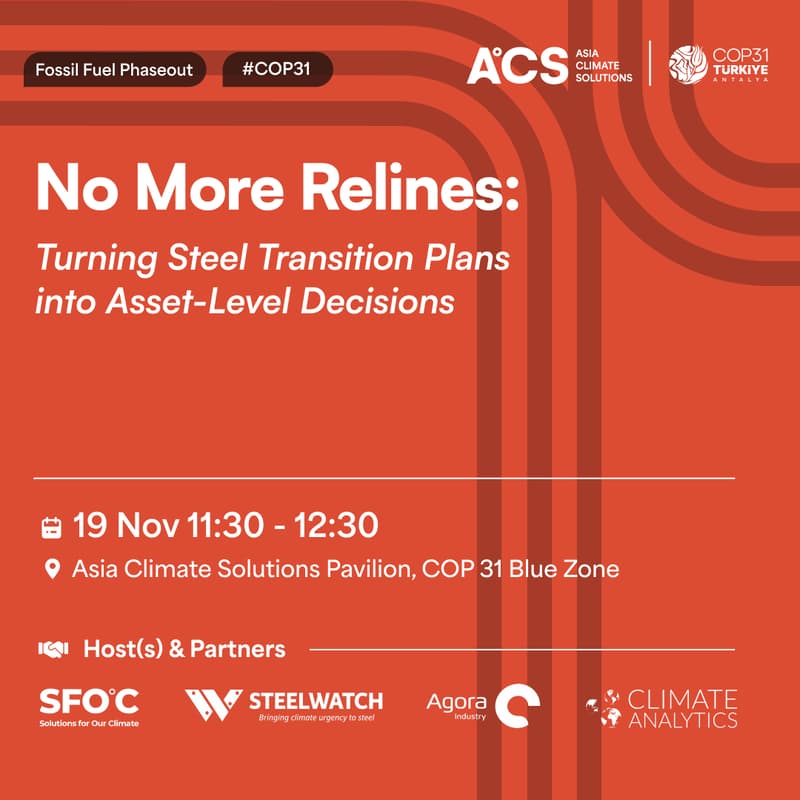

No More Relines: Turning Steel Transition Plans into Asset-Level Decisions
The global steel transition is moving from long-term commitments toward decisions that will determine the future of individual steel assets. While governments and steelmakers are increasingly announcing investments in hydrogen-based ironmaking, electric furnaces, renewable energy and other lower-carbon technologies, investment in new technologies is only one side of a credible transition.
An equally important question is what happens to existing coal-based blast furnaces, and when.
Blast furnaces can operate for decades, with major relining and reinvestment decisions potentially extending their operation for another 15 to 20 years. Without clear plans for when these assets will be retired, replaced or transformed, continued investment in existing coal-based capacity risks locking in emissions and making long-term climate targets harder to achieve.
Taking place on 19 November, under the COP theme “İmece: Enhancing Implementation,” this session will focus on moving from ambition to concrete and credible transition planning. Rather than discussing only what new technologies and facilities need to be built, the session will focus on the other side of the transition: what needs to be phased out, and by when.
The session will bring together perspectives from climate science, asset-level analysis and civil society to explore what credible blast furnace phase-out planning should look like, what steelmakers should disclose, and how soon those plans need to become publicly available.
[Setting the scene]
Hyesung An, Researcher,
Solutions for Our Climate (SFOC)
[Round Table]
Facilitator: Chaejin Shin
Strategy Associate, SFOC
Participants:
Caroline Ashley
Executive Director, SteelWatch
Olivia Waterton
Climate Policy Analyst, Climate Analytics
Karina Marzano Franco
Project Lead for Trade and International Partnerships, Agora Industry