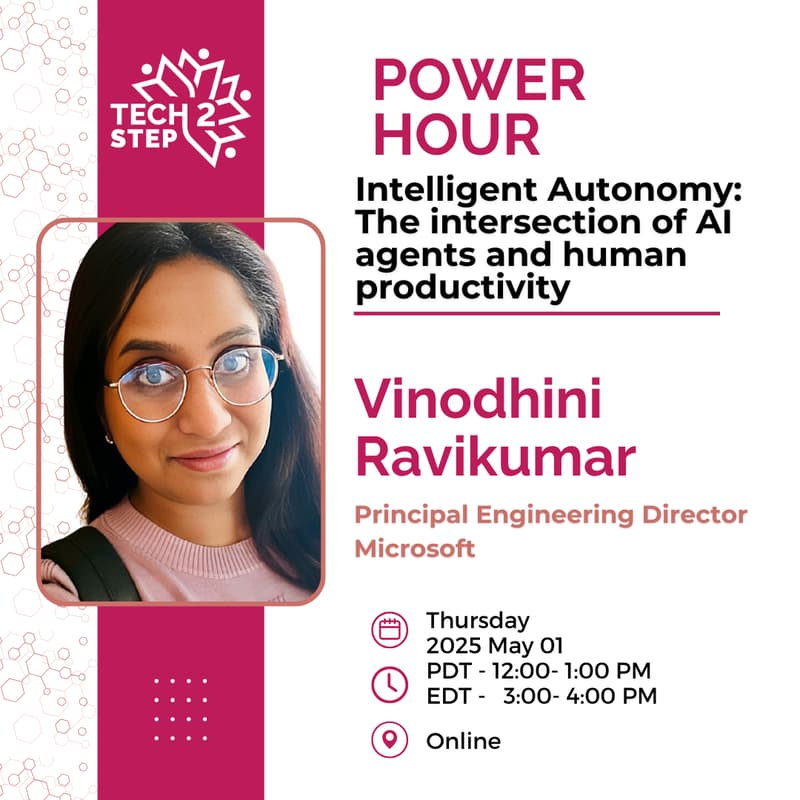

Intelligent Autonomy: The intersection of AI agents and human productivity
We’re entering an era where AI doesn’t just respond—it initiates.
Imagine waking up to an AI that not only knows your calendar but senses your mental bandwidth, adjusts your workload, nudges you to hydrate, and coaches you through a tough moment—all without being asked.
This isn’t science fiction—it’s agentic AI.
This talk explores how large language models are evolving from passive assistants into autonomous collaborators that can optimize not just what we do, but how we live.
Through the lens of health and personal productivity, we’ll unpack how these intelligent systems can empower neurodivergent individuals, manage chronic health routines, and support high-performance lifestyles.
We’ll also dive into the ethical tightrope: what happens when AI knows us better than we know ourselves?
Ultimately, this isn’t just a story about AI—it’s a story about reclaiming time, attention, and agency in a world of cognitive overload.
Key takeaway:
Agentic AI is redefining what it means to be productive in the modern workplace. These intelligent systems move beyond passive support, acting as proactive collaborators that can help jobseekers manage mental energy, structure their days, and stay aligned with personal and professional goals.
For those navigating career transitions—especially neurodivergent individuals or people managing stress and burnout—agentic AI offers tools to stay focused, build healthy routines, and amplify strengths.
As the nature of work evolves, mastering how to work with autonomous AI isn’t just an advantage—it’s a key differentiator. But with this power comes the responsibility to ensure these tools enhance human agency, not replace it.
The future of productivity is personal, proactive, and deeply human-centered.
About Vinodhini Ravikumar
I'm the founder of Mind Mosaic AI, a social enterprise building agentic AI tools to support neurodivergent productivity and wellbeing. I currently work at Microsoft, where I lead AI-driven product innovation, and hold a PhD in Machine Learning and NLP. My work bridges applied AI, cognitive design, and inclusive technology—focused on creating intelligent systems that don’t just automate tasks, but enhance focus, mental health, and human agency.