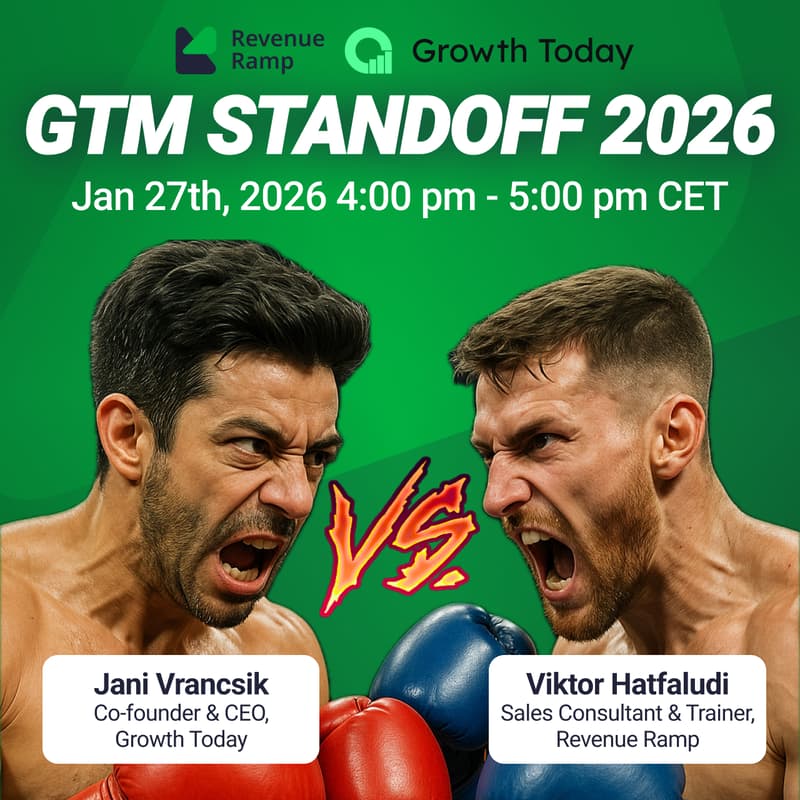

Knowing What Not to Automate Is Your New Edge
You’ve built your 2026 account list. Now comes the decision that makes or breaks Q1: what do you automate, and what should you never automate?
Imagine starting the year convinced your team is set up for a strong Q1. Then the cracks show: reps are prioritising accounts based on automation rules that seemed smart but quietly pulled them away from the prospects most likely to move.
Weeks go by chasing weak signals.
Working low-intent accounts.
Calling new logos that were never in-market to begin with.
With that, the early pipeline you were counting on just isn’t there, and reps stop trusting the new strategy. Where do you think the plan fell short?
When every team has access to AI agents, intent data, and enrichment tools, will competitive advantage come from doubling down on automation, or does it lie in knowing what not to automate so reps can stand out through the power of their network? Where does real momentum come from?
In this second back-to-back session, the gloves are off, and we’ll put two very different philosophies head-to-head:
Viktor swears high-performing teams win by not automating the parts of selling that build trust, momentum, and use real buying intent.
Meanwhile, Jani claims programmatic outbound, when built right, finds more opportunities faster than any “network-only” motion ever could, and that there’s a way to scale it without losing quality.
We’ll walk through how each of us approaches:
tiering accounts,
prioritising who actually converts early, and
balancing relationship signals with data signals.
We’ll discuss how we use tools like Clay and Sales Navigator, but more importantly, we’ll show you how to think about prioritisation so the tools finally work for you.
You’ll walk away with two playbooks and the clarity to choose the right blend for your team.
Because starting 2026 strong isn’t about being “pro-automation” or “anti-automation.” It’s about getting the order right and how to make both work together without wasting Q1 on the wrong accounts.