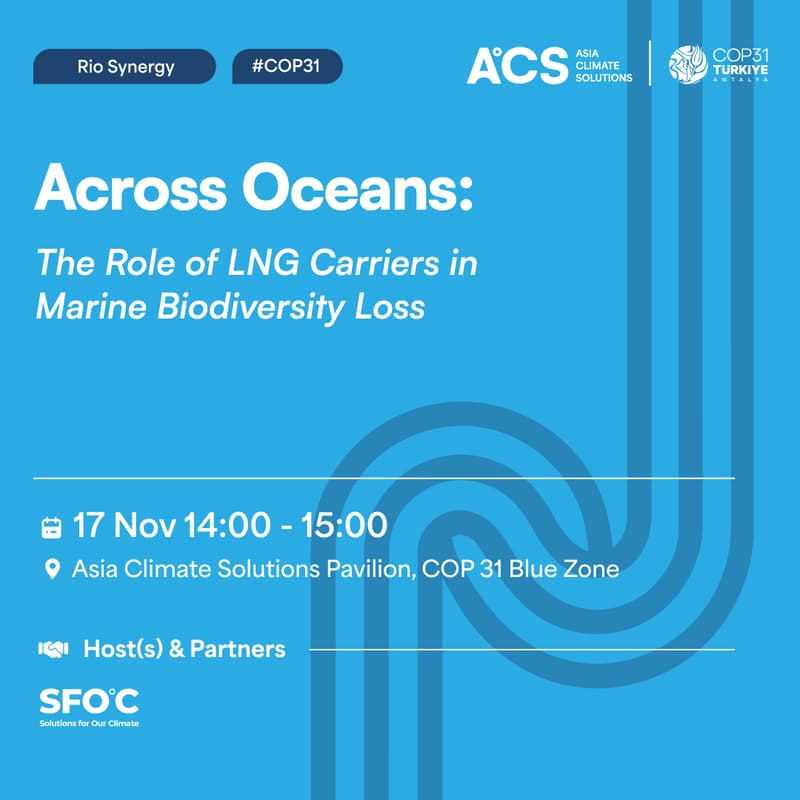

Across Oceans: The Role of LNG Carriers in Marine Biodiversity Loss
As global demand for LNG grows, its impacts extend far beyond emissions. Across the LNG value chain, expanding fossil fuel infrastructure and shipping are placing new pressures on marine ecosystems and the communities that depend on them.
This event will open with a screening of a short documentary by Solutions for Our Climate (SFOC), following different stories along the intersection of fossil fuels and a changing ocean: Korea’s haenyeo on Jeju Island, who have witnessed profound changes in the marine environment they have depended on for generations; coastal communities in Louisiana living alongside the infrastructure that underpins the global LNG trade; and the LNG carrier routes connecting global supply chains, examining how growing maritime traffic can place additional pressures on marine biodiversity and ocean ecosystems.
Following the screening, a panel of experts and advocates will bring these stories into a broader conversation about LNG expansion, shipping, climate change, marine biodiversity loss, and ocean governance. What does the continued expansion of the LNG value chain mean for ocean protection? How can marine biodiversity and ocean governance be better reflected in decisions around fossil fuel infrastructure and maritime transport? And what would it mean to put the ocean at the center of the transition away from fossil fuels?
Join us on Ocean Day at COP31 for a conversation connecting communities, climate, biodiversity, and ocean governance across oceans.
🎙️ Speakers:
Elissama Menezes, Director and co-founder, Equal Routes
Jacob Netzler, Climate Diplomacy Lead, Climate Action Network Australia
Daniella Cha, Gas Public Finance Lead, Solutions for Our Climate
Gerry Arances, Executive Director, Center for Energy, Ecology, and Development (CEED)