Impossible Creatures
Is it possible to understand a creature that has lived for millennia? Is it possible to read in their contorted, unlikely woody bodies, histories of the lands that they have witnessed and mutually shaped? What kind of life was this to begin with?
The Institute for Contemporary Critical Thought is pleased to invite you to join us for a seminar and discussion with Mihnea Tănăsescu, on impossible lives of ancient olive orchards and the possibility of finding other ways of thinking that make us uneasy.
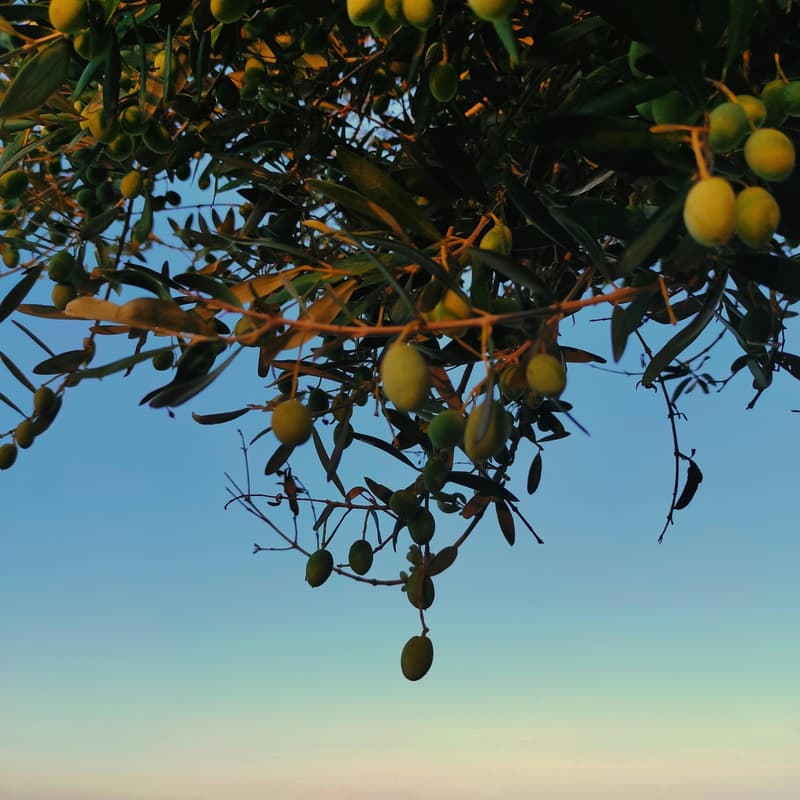
"The project I would like to discuss," writes Mihnea, "starts from a particular field, the ancient olive orchards of Salento, Southern Puglia, Italy. That specific region had the most extensive monumental olive orchards anywhere in the world, with sometime millennial trees extending over the landscapes for hundreds of kilometers, in a kind of original monoculture that had outgrown its monotony by becoming sublime. I use the past tense because now, just over a decade after the discovery of a new bacterial pathogen infecting olive trees (Xylella fastidiosa), most of those groves are either gone, replaced by new and perfected monocultures and solar panels, or are ghostly dry presences, regularly burning throughout the hot months and waiting with charred stumps for the next fire season, until they would have finally melted into the earth.
"This situation, or perhaps we should call it an event, is a clear loss of a kind that cannot be undone. Once millions of centenary olive trees are gone, the memory of their existence, and therefore of the processes that have shaped them, is also critically endangered. The timescale of olive life crashes into the acceleration of modern development that includes the transport of deadly pathogens throughout the world and the general impoverishment of creaturely lives everywhere. Olive life of this sort is finally shattered.
"But what kind of life was it to begin with? Is it possible to understand a creature that has lived for millennia? Is it possible to read in their contorted, unlikely woody bodies, histories of the lands that they have witnessed and mutually shaped? And when they are gone, how many possible stories are also lost, and why does it even matter?
"This is not a matter of the end of the world. The world of Salento is not ending, people and other creatures, including new patented ones, still live there, among radically changing landscapes. Many of these changes are driven by locals, many are not. Blame is always slightly out of focus. It is also not about living in ruins, or about ontological clashes. Or rather, we could investigate the situation that way, but that is not what the field suggests to me. I would rather look at this event as a revelation of something else, a cluster of ideas that for now I call “impossible creatures”. These ancient trees are impossible in many ways, even though they have actually existed, and some still actually exist.
"What I mean by impossible creatures is that their very existence can never be fully explained, and their eventual restoration is on a timescale that we (or at least, I) can no longer contemplate. The body of an ancient tree tells many stories that can be read, but the text itself is often in a foreign script whose code cannot be found. They insist on the existence of a deep history, they throw it in your face, yet at the same time they escape a full historical account. They are testaments to the uncertain foundations of our knowledge, to the idea that explanation is impossible. All we can do is offer good descriptions, and change them, and change them again, and learn to read better, more faithfully, through a tiresome and difficult process that no longer makes any sense in today’s fast world.
"They also make the impossible possible by consistently overflowing human expectations, by misbehaving. For example, some trees that have been dead for over a decade are now seemingly coming back to life, in a process that nobody understands and that resembles a Biblical miracle. Perhaps this is just the latest miracle in a series that has been lost to memory. The deep past that holds such secrets can hardly be imagined, a past when these same creatures, already huge, were centuries away from the invention of asphalt. Their contemporary eradication at the hands of rushed people that no longer wait for miracles sketches a future without impossible creatures. Their disappearance finally excuses us from drawing the lessons of impossibility.
"The ideas I am working through are raw; they almost hurt like sensitive skin sometimes hurts, a kind of discomfort rather than pain. I’m not yet sure how to talk about them, or if the terms I am working with are the good ones. They partly come out of the readings I shared, but in oblique ways that may end up undermining what I wrote there. Be that as it may, I’m eager to be uncomfortable together."
Pre-readings to stimulate reflection and discussion for the session will be forwarded to those who register.
Mihnea Tănăsescu is Research Professor of the Fund for Scientific Research (F.R.S.–FNRS), in the School of Human and Social Sciences, department of Sociology and Anthropology, University of Mons, Belgium. Born in Bucharest (Romania) in 1984, he studied human ecology (College of the Atlantic, ME, USA), philosophy (New School for Social Research, NY), and political science (PhD., Vrije Universities Brussel, Belgium). His work includes the legal and political representation of nature, the politics of nature conservation, the history of cartography, and the politics of plant pathology. His latest books are Ecocene Politics and Understanding the Rights of Nature: A Critical Introduction. He lives and loves in Brussels, Belgium.
The event is FREE, but we will be grateful for your support through a regular or one off donation. Hence the pay-what-you-can system of ticketing: Any amount you can donate will help us continue creating a space where critical thought and collective inquiry are open and accessible. If you're unable to make a donation at this time, please feel free to write "0" on the amount.