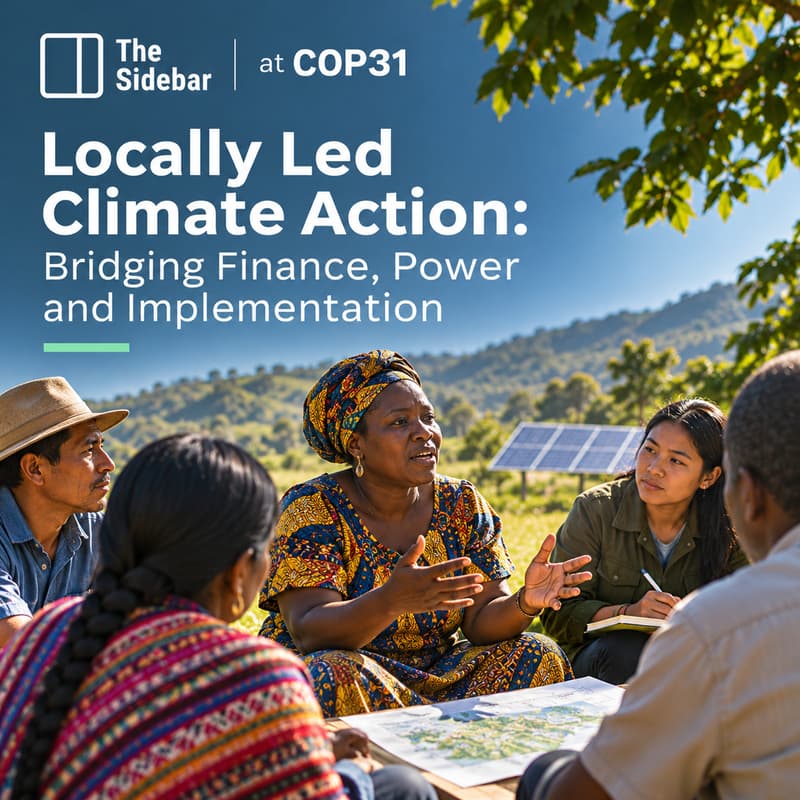

Locally Led Climate Action: Bridging Finance, Power and Implementation
Event Description
Global climate commitments are only as effective as the action they enable on the ground. Yet a persistent gap remains between the international institutions that set climate priorities and control resources, and the local communities and civil society organisations responsible for delivering solutions. As political pressures mount and funding becomes more constrained, many grassroots organisations face growing challenges in accessing finance, influencing decisions, and sustaining their work.
This discussion will explore what it takes to move from global commitments to genuinely locally led climate action. Participants will examine how international climate finance can better reach community organisations, support locally led adaptation, and strengthen the institutions and movements delivering change. The conversation will also consider how civil society and local communities can gain meaningful influence within COP negotiations and international climate governance, moving beyond consultation toward genuine decision-making power.
A particular focus will be on the relationship between finance, power, and civic space. How can international cooperation better respond to locally defined priorities rather than imposing external agendas? What does it take to protect the independence and effectiveness of civil society organisations operating under increasing political and financial pressure? And how can funding mechanisms be redesigned to give communities greater control over resources and accountability for outcomes?
As the gap between climate ambition and implementation becomes increasingly urgent, the challenge is not simply getting more money to the local level. It is ensuring that communities have the authority, resources, and institutional support to shape and deliver the climate solutions that affect their lives.
Featuring
Anna Robyn is Education Program Manager at Friendship, advancing access to education and learning opportunities for underserved communities.
Ioanna Schuppert is Partnerships Manager: Grantmakers at HOST - ally for action, strengthening funding infrastructure and partnerships that enable locally led climate action and social justice initiatives.
Qamar Iqbal is Co-Founder & CEO at Climate Alliance Pakistan, advancing locally led climate action, equitable climate finance, and international cooperation that connects grassroots solutions with global policy.
Discussion Questions
How can international climate finance be redesigned to reach grassroots organisations more directly and support locally led adaptation and implementation?
What would meaningful decision-making power for civil society and local communities look like within COP processes and international climate governance?
How can international cooperation strengthen locally led climate action without reinforcing donor-driven priorities or undermining community ownership?
What role should governments, funders, and international institutions play in protecting civic space and sustaining grassroots climate organisations facing growing political and financial pressures?"