
Who Owns the Picture and What Changes
THE SIDEBAR, UNGA 2026
Session invitation
ABOUT THE SESSION
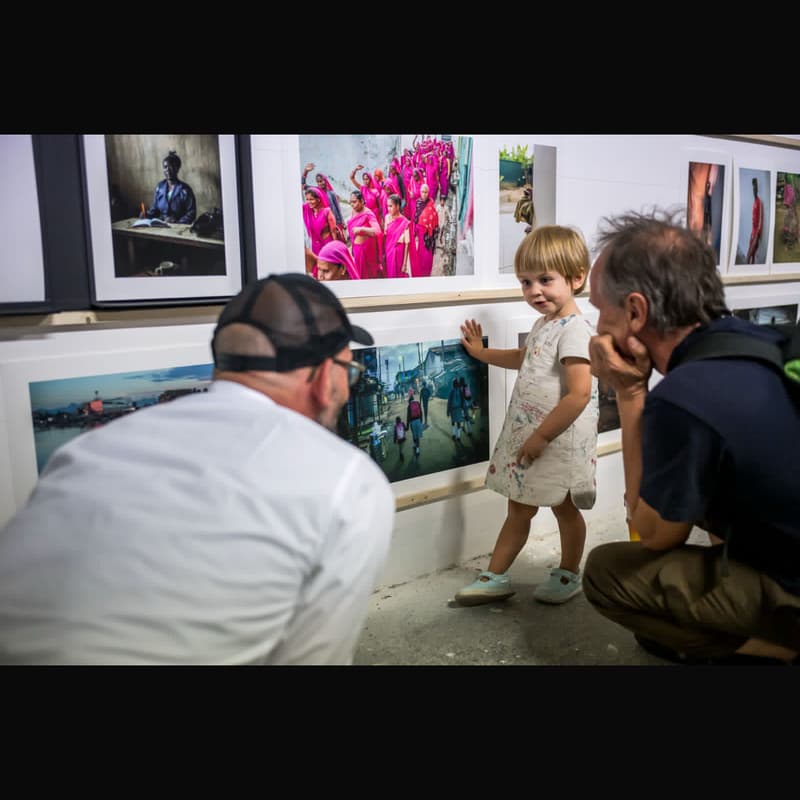
In June, young mothers in informal settlements across Nairobi co-authored a photography portfolio (partnership between The PhotoBridge Project and the Girls Empowerment program of CFK Africa). In August, the same young mothers stood in front of their own portraits in a gallery in Nairobi. The portraits of these teen moms come to The Sidebar in September, and travel again for CFK Africa's 25th anniversary.
We know where the pictures went. The challenge is to measure what they changed.
The early signals are qualitative, surfacing before any external audience sees a picture. Women who felt invisible see their own agency reflected back at them. Organizations start describing themselves differently, and then begin to act differently. Communications evaluation counts reach and impressions, often missing these critical changes.
So this session asks three questions we cannot answer alone.
Who decides what counts as evidence?
What can locally defined measures capture that conventional evaluation misses?
If an organization owns the images, does it also own the right to define what those images did?
The PhotoBridge Project is early in answering these and intends to say so in the room.
WHY OWNERSHIP SITS UNDERNEATH ALL OF THIS
A photographer arrives, works for ten days, and leaves with the pictures. The local organization rarely keeps them, or knows where the story goes. The PhotoBridge Project was built the other way around, and partner organizations own their portfolios outright, with no license and no expiration.
That changes who has standing to say what the work was worth. The Palestinian House in Yarmouk, Damascus, said it plainly after dozens of media delegations arrived following liberation: "We need friends, not just media professionals. We are not news material; we are lives seeking to rebuild themselves."
WHAT TO EXPECT
The portfolio will be on the walls, not in slides. Alongside it, the photographs from the Nairobi gallery: young mothers looking at themselves, at scale, in a real art gallery.
CFK Africa joins from Nairobi with audio and visual. Katie Gifford spent over a decade at UN Women and knows why measurement of this kind keeps falling short. Guillaume Binet has photographed communities in conflict and displacement for nearly three decades. Karen Lambert will press all of them on who decides what counts.
They open by working through what this portfolio can and cannot tell us. Then the room takes over, and participants are invited to attack the assumptions behind the model.
We bring three commitments to that conversation: learn from people further along than we are, use measures defined locally, and leave the evaluation skills inside the partner organization when the portfolio is done.
Bring your hardest question.
WHO SHOULD COME
Anyone who has let a photographer into their community and never seen the images again. Anyone whose story ended up somewhere they did not agree to. Anyone who has funded storytelling without being sure what they were buying.
FEATURING
CFK Africa
Katie Gifford, Independent Consultant, formerly UN Women
Guillaume Binet, Chief Vision Officer, The PhotoBridge Project
Karen Lambert, Executive Director, The PhotoBridge Project
Hosted by The PhotoBridge Project