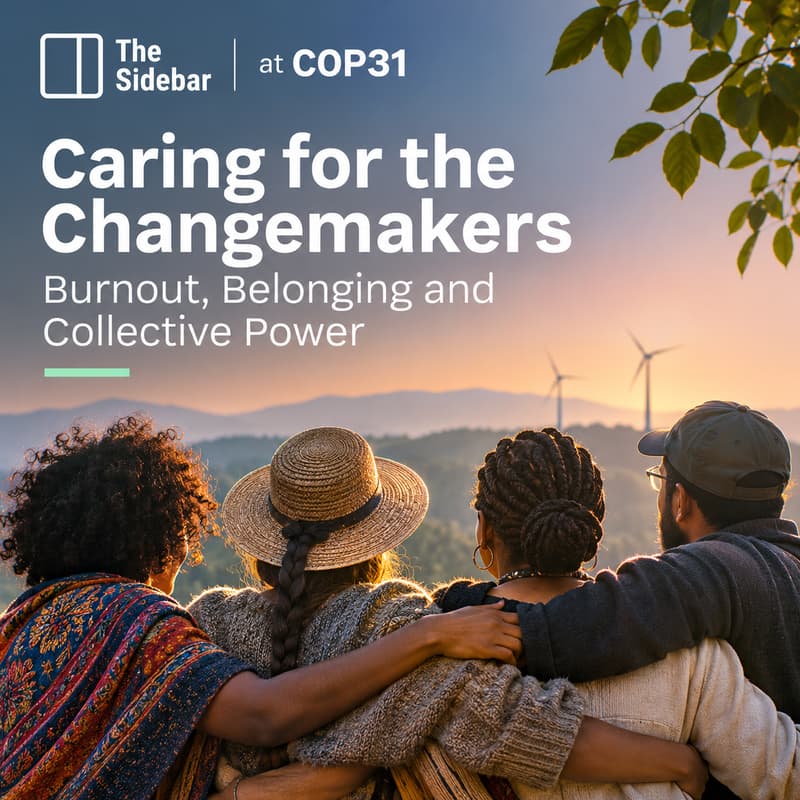

Caring for the Changemakers: Burnout, Belonging and Collective Power
Event Description
Transforming the systems driving the climate crisis requires more than ambitious strategies, innovative solutions and financial investment. It also depends on the people, relationships and movements that make change possible. Yet while considerable attention is given to funding climate interventions, far less is invested in sustaining the individuals and communities working to challenge entrenched power structures and build more just and resilient futures.
This discussion will explore what it means to put people at the centre of climate systems change. From grassroots organisers and activists to organisational leaders and community movements, participants will examine the resources and conditions needed to sustain long-term collective action. Particular attention will be given to changemakers across the Global Majority, whose work often combines climate action with struggles for rights, justice and economic transformation.
The conversation will also address the emotional and relational dimensions of climate leadership. Eco-anxiety, burnout, uncertainty and the pressures of working towards systemic change can undermine the very people driving progress. How can care, psychological wellbeing, reflective leadership and approaches to processing climate emotions become integral to the way movements and organisations operate?
Beyond individual resilience, participants will consider how funders and institutions can invest in trust, solidarity, meaningful relationships and collective agency. What would it look like to resource the often-invisible work of building movements and sustaining collaboration, rather than funding only measurable projects and short-term outcomes?
This conversation will explore how a more people-centred approach to climate action can strengthen the individuals, relationships and movements needed for lasting systems change.
Featuring
Erin Roberts is Founder and Executive Director at Loss and Damage Collaboration, advancing equitable climate policy on adaptation and loss and damage while connecting people and ideas to strengthen global climate action.
Esthappen S is Communications Lead at Climate Leadership Initiative (CLI), advancing climate justice through participatory storytelling, strategic communications, and collaborative approaches to narrative change.
Hanna Davidson is Partnerships Manager: Grantmakers at HOST - ally for action, strengthening funding infrastructure and partnerships that enable locally led climate action and social justice initiatives.
Juliana Uribe Villegas is CEO and Founder at Movilizatorio, advancing citizen engagement and social innovation by connecting communities, organizations, and decision-makers to develop collective solutions to complex social challenges.
Shantanu Mandal is Media Delegate, Liaison for Youth Activities and Food Systems at Brahma Kumaris World Spiritual University, advancing sustainable lifestyles, youth engagement, and environmental awareness through communications and values-based climate advocacy.
Discussion Questions
How can climate funders and institutions move beyond project-based financing to resource the people, relationships and movements that sustain long-term systems change?
What approaches to conscious leadership, collective care and psychological wellbeing can help climate activists, organisers and practitioners navigate eco-anxiety, burnout and uncertainty without placing the burden of resilience solely on individuals?
How can climate organisations and movements, particularly across the Global Majority, build trust, solidarity and genuine connections that strengthen collective agency and enable different approaches to systemic transformation?
What would need to change in funding practices, organisational cultures and definitions of success to recognise and support the often-invisible labour of relationship-building, care and movement-building?"