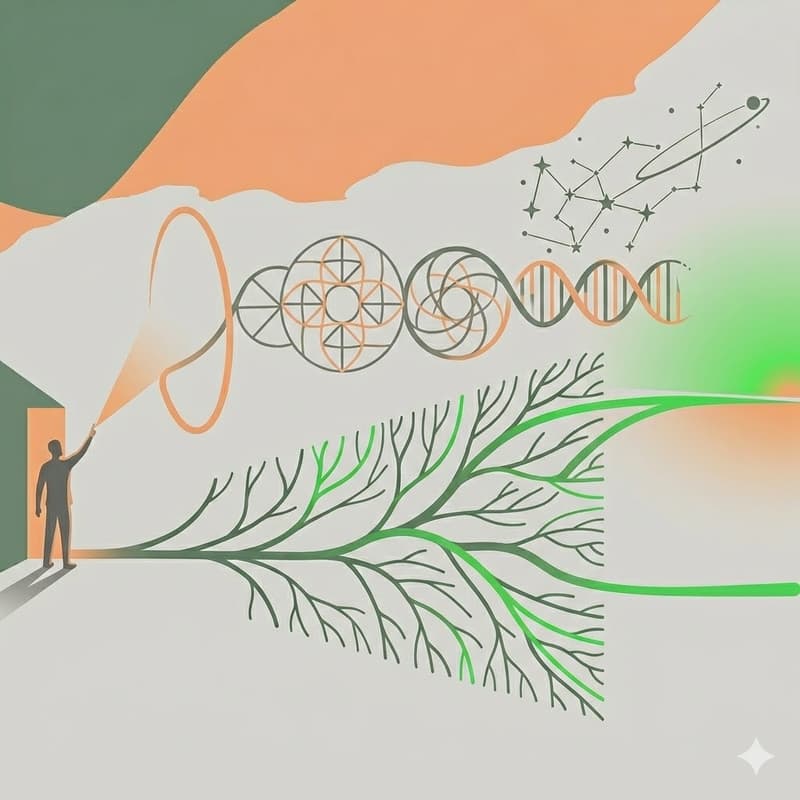

Why Progress Is Not Inevitable by David Deutsch
Modernity is often narrated as a natural ascent: science advances, technology accelerates, societies become wealthier and more capable. Progress appears inevitable in retrospect.
Historically, it was not.
For most of human existence, societies remained intellectually and technologically static for centuries at a time. Knowledge did not accumulate without bound. Innovation was episodic, fragile, and often suppressed. The emergence of sustained, open-ended progress is a rare phenomenon requiring explanation.
Drawing on arguments developed in The Beginning of Infinity, this seminar examines progress not as optimism or ideology, but as an epistemological condition. Under what circumstances does knowledge grow? Why do some societies correct errors while others entrench them? What institutional arrangements make discovery possible — and which prevent it?
The course treats civilization as a knowledge-creating system. Its survival depends not on stability, but on the continuous improvement of explanations.
Format
Five-day live seminar
90 minutes per session
Lecture (60 minutes) + moderated discussion (30 minutes)
Closed cohort
Daily Outline
Day 1 — The Beginning of Infinity
Finite versus open-ended explanations. Why some traditions aim at authority, while others aim at truth.
Day 2 — Conjecture and Refutation
Error correction as the engine of knowledge growth. Why criticism, not consensus, drives discovery.
Day 3 — Static Civilizations
Why most societies historically suppressed innovation. The cultural and institutional features of intellectual stagnation.
Day 4 — The Enlightenment as an Epistemic Shift
Why the Enlightenment represented a transformation in how knowledge is treated — not merely a political transition.
Day 5 — Fragility, Reversibility, and Civilizational Risk
Is sustained progress guaranteed? The conditions under which knowledge-creating systems can fail.
What This Seminar Is For
This seminar is designed for:
Institutional designers and governance researchers
Scientists, technologists, and founders
Philosophers of science and political theorists
Builders interested in the long-term survival of open societies
No prior background in physics is required. The subject is not technical physics, but the logic of discovery itself.
Participants should expect conceptual rigor rather than historical survey or motivational framing.
Why It Still Matters
Technological civilization is not self-sustaining. It depends on social arrangements that permit error correction, protect dissent, and treat no authority as final.
If progress is the result of specific epistemic norms — rather than an automatic outcome of complexity or markets — then those norms must be understood and defended.
The question is not whether humanity will continue advancing. The question is whether we will maintain the conditions that make advancement possible.
Understanding the logic of progress is therefore not an abstract philosophical exercise. It is an inquiry into the preconditions of civilizational survival.