Digitalization of Social Policies in Brazil: an analysis based on the theoretical contributions of Álvaro Vieira Pinto
Digitalization of Social Policies in Brazil: an analysis based on the theoretical contributions of Álvaro Vieira Pinto
Professor Jaime Hillesheim
In person at Kings College London and online on Zoom, with room confirmation and link sent after registering. The event will be followed by a drinks reception.
Abstract
The digitalization of public services has become a global trend. Countries such as South Korea, Denmark, the United Kingdom, Norway, Australia, and Estonia, for example, stand out in this process, although at very different paces and intensities. Brazil also appears near the top of this list according to the most recent World Bank reports, particularly due to advances related to the set of information and services available through the unified portal gov.br. The process of digitalizing public services gained greater priority from the 2000s onwards, when the Brazilian government officially established a policy for digital transformation of the State, today referred to as the National Strategy for Digital Government (EGD).
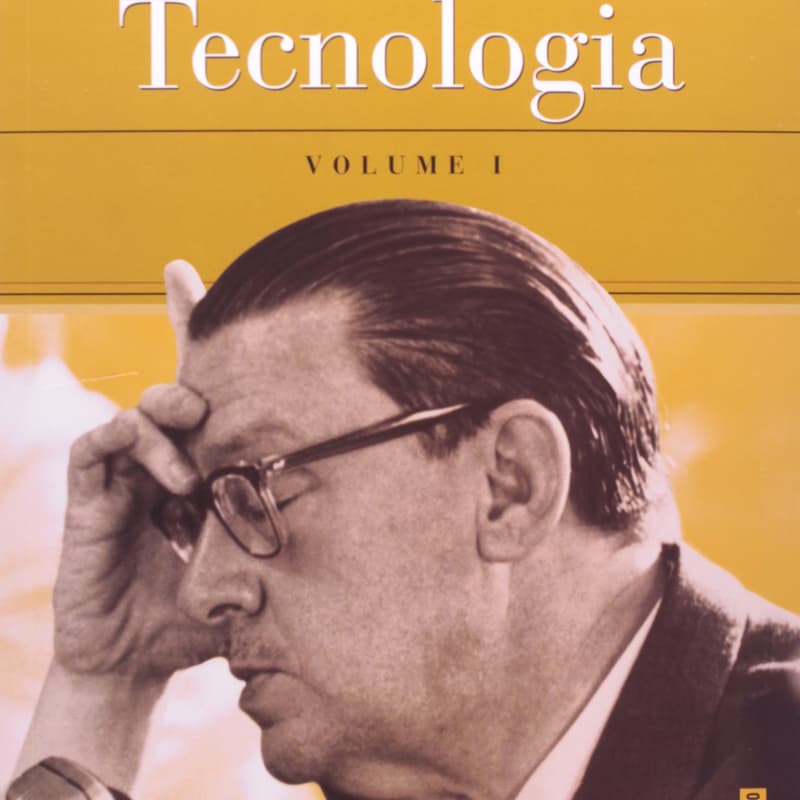
This strategy is guided by the principle of transforming public administration through digital technology. However, it has been observed that this process is intersected by the interests of large technology corporations, which see in it an opportunity to expand the market for their products, such as management system hosting, data storage and processing, predictive analytics systems, and chatbots for user support, and so on. Under the influence of these large technology corporations, relationships of dependency are reproduced, now extended more intensively to technological development. This push for digitalization of public services—particularly social policies aimed at meeting the needs of the working class—does not always take into account the objective and subjective conditions of workers to access social policies mediated by digital technologies. In this session, organized in partnership with the Department of Digital Humanities at King’s College, we intend to problematize these issues based on the contributions of the Brazilian philosopher Álvaro Vieira Pinto, as presented in his work The Concept of Technology.
Speaker
Professor Jaime Hillesheim holds a PhD in Social Work from the Graduate Program in Social Work at the Federal University of Santa Catarina. He is a faculty member of both undergraduate and graduate Social Work programs at the same institution. He is a research member of the Center for Studies and Research on Labor, Social Issues, and Latin America and a Research Productivity Fellow of the National Council for Scientific and Technological Development (CNPq).
He coordinates research on Social Work, Labor, and Technological Innovations and is part of the research group focusing on “Challenges in Access and Professional Interventions in Social Policies in the Face of Information and Communication Technologies (ICTs)”, a project also funded by CNPq, involving three Brazilian universities (Federal University of Santa Catarina, Federal University of Rio de Janeiro, and Federal University of Alagoas).
Currently, he serves in the management of the Brazilian Association of Teaching and Research in Social Work (ABEPSS), as Coordinator of Graduate Studies for the Southern Region I (2025–2026). He has expertise in Social Work, with an emphasis on Social Work and Labor, researching topics such as labor, technological transformations, social work, and the professional labor market.