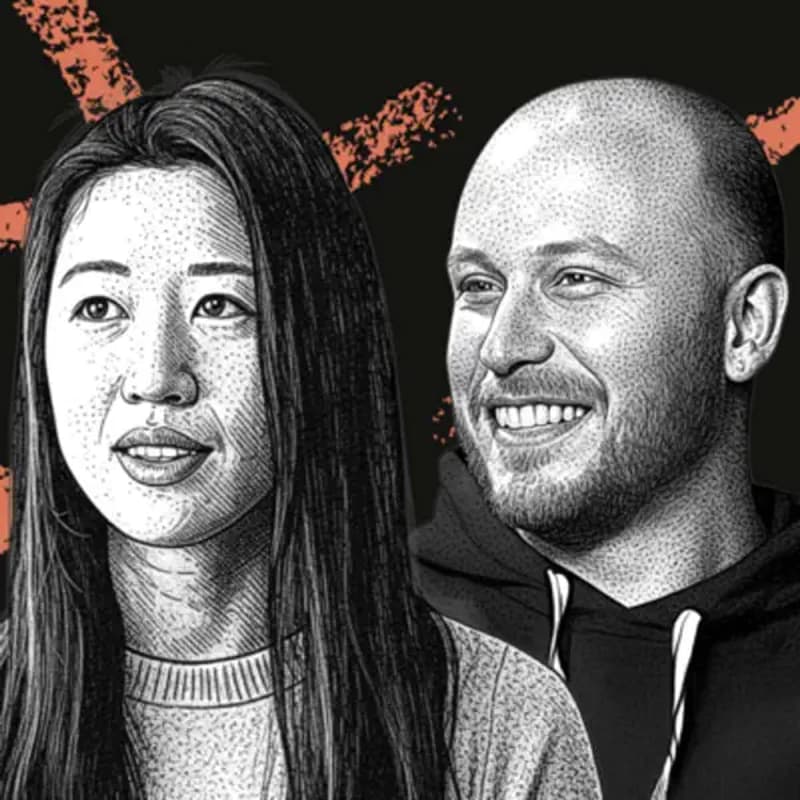


Outdoor Discussion Walk: The Secrets of Claude Code
Let's discuss a podcast interview while taking a walk at Georgetown Water front.
The podcast interview is on Claude Code’s creators: Cat Wu and Boris Cherny from Anthropic, whom discusses what they’ve learned from building one of the most beloved AI engineering tools in the world.
Here is how it works:
Prior to the event: [Optional] Listen to the following Podcast Episode (during your commute or workout). Any of the following 3 link works):
YouTube Link: Watch on YouTube
Spotify Link: https://open.spotify.com/episode/7yJ1kUxwE750WIc1lyZcaT
Apple Podcast Link: https://podcasts.apple.com/us/podcast/inside-claude-code-from-the-engineers-who-built-it/id1719789201?i=1000734060623
During the event:
3pm-3:30pm: meet at Tazza Cafe (near Kennedy Center) for group introduction.
3:30pm - 4:40pm: Walk Around Georgetown Water Front and Discuss
Walking Route Link: https://scenic-walk.com/#/371aa422 (During the hike, the organizer will live broadcast current location, so that people who arrive late can catch up via the Scenic Walk Link).
4:40pm - 5pm: Group Conclusion at Tazza Cafe.
Discussion Questions During Walk:
Instead of just fixing software bugs, the team teaches the AI not to repeat past mistakes. How can we capture our organization's wisdom so that it is automatically applied by our systems?
By abandoning the IDE for the CLI, the agent gained full autonomy. How much control and security are we willing to surrender to achieve higher performance?
Simple grep commands outperformed complex vector databases for code retrieval. Where might we be over-complicating our technology when the simple solution is actually superior?
They delete popular features the moment the AI becomes smart enough to do the task itself. How do we embrace a strategy where product success implies removing the features we just built?
They designed tools that function exactly the same way whether a human or an AI is using them. How does our strategy change when we treat the AI as a capable colleague rather than just a passive tool?
Because the AI builds so fast, the team stopped writing planning documents and just started building prototypes. How do we manage effective governance when showing a working product becomes faster than writing the plan?
Group Mission
Deep Discussions for Bold Innovators.
👥 Who should join
AI practitioners, startup founders, students, and researchers curious about AI’s development and impact.
Community Ground Rules
To provide an enjoyable experience for fellow participants, here are three ground rules during discussion events:
Step up and step back. (If you feel that you’ve been talking too much, step back to listen more. If you feel that you’ve been relatively quiet, step up to share your perspective or ask a question)
Listen to understand, not to respond.
Be open-minded and value differences.