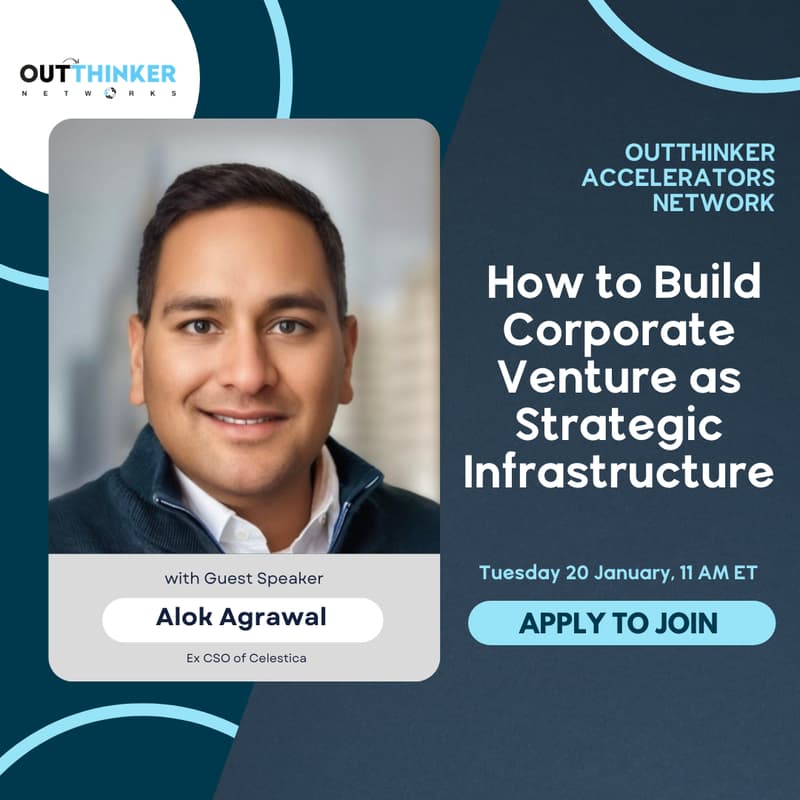

From Strategy to Venture: How to Build Corporate Venture as Strategic Infrastructure
⚡From Strategy to Venture: How to Build Corporate Venture as Strategic Infrastructure
Inside every company there is a silent tension:
📈 Strategy wants transformation.
💰 Finance wants predictability.
💡 Innovation sits uncomfortably between the two.
When companies try to solve this with corporate venture, they usually create innovation theater instead of strategic infrastructure.
**The pattern is predictable:** Corporate venture programs get launched with fanfare, make a few investments, then quietly dissolve when the innovation budget gets cut or leadership changes.
**But some work.** The ones that succeed don’t treat corporate venture like R&D or innovation projects. They treat it like M&A—with the same strategic rigor, the same capital allocation discipline, and the same integration into core business strategy.
The difference between innovation theater and strategic infrastructure comes down to design.
🎙️ This Month’s Speaker: Alok K. Agrawal
Alok K. Agrawal built one of the corporate venture programs that actually worked.
As a member of the Executive Leadership Team at Celestica (NYSE: CLS), reporting to the CEO, Alok led corporate strategy, M&A, and innovation—work that contributed to doubling revenue to $10B and 15x stock appreciation.
He founded Celestica Ventures and built it to over $15M AUM in its first year—not as an innovation experiment, but as strategic infrastructure designed with the same discipline as M&A.
The breakthrough?
Treating venture capital as a core capital allocation decision, not an innovation program. Using the same investment framework as M&A. Being willing to defund legacy investments to make room for venture bets. And designing portfolio integration into the core business from day one.
Today, Alok advises enterprises on capital allocation strategy and corporate venture design. He helps companies either build venture programs that work from the start—or fix existing programs that have become innovation theater. He backs founders building critical infrastructure in AI, space and defense, and robotics through Agrawal Capital, leading a venture syndicate of 25+ limited partners with a portfolio of 30+ companies and several million dollars AUM.
**This roundtable will show you how to design corporate venture as strategic infrastructure—and how to avoid the innovation theater trap that kills most programs.**
🧠 What we’ll explore
• Why most corporate venture programs become innovation theater—and the warning signs that separate theater from strategic infrastructure
• How to treat venture capital as a capital allocation decision with M&A-level rigor rather than as an innovation experiment
• The critical design decisions that determine whether corporate venture strengthens or distracts from core strategy
• How Celestica Ventures was structured: strategic thesis, capital sources, investment criteria, and portfolio integration
• What to defund to make room for venture investments—and how to build the business case that Finance will support
• How to measure strategic value beyond financial returns, and what metrics actually matter for corporate venture success
🗓️ Agenda
🔹 Introductions & Context – Why most corporate venture programs fail—and how to recognize whether you’re building theater or infrastructure
🔹 Talk & Insights from Alok Agrawal – The Celestica Case Study: Building Strategic Infrastructures and Key Design Decisions for Corporate Venture
🔹 Peer Discussion – Where do you struggle: prioritization, credibility, capacity, or venture alignment?
🔹 Q&A and Takeaways – Real scenarios, hard trade-offs, and how to apply these approaches to your organization’s corporate venture challenges