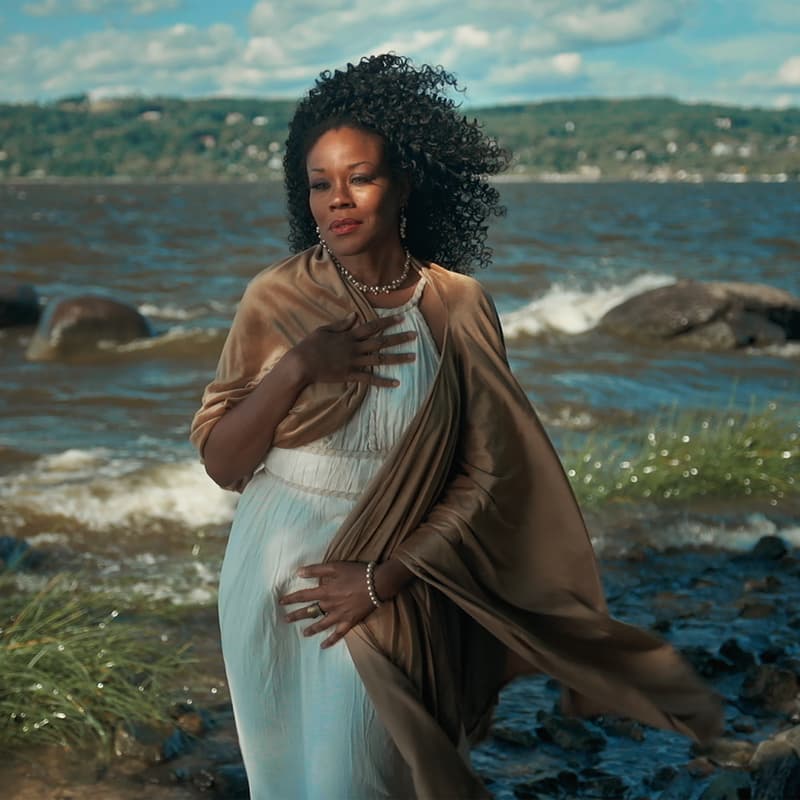

Driftlines Film Festival: Feature Documentary - Holding Back the Tide
About this event
This session features the film Holding Back the Tide (2023), followed by an in-person roundtable discussion with Director Emily Packer, Melva Treviño Peña, Jessica Brown, and Azure Cygler, moderated by Cinda Scott.
About the films
Holding Back the Tide (2023, 77 min): Holding Back the Tide celebrates the oyster as a queer icon, taking the bivalve as an entry point into the coastal and cultural worlds of New York City, once known as the oyster capital of the world. The oyster – a protandrous hermaphrodite capable of changing from male to female and back – serves as a lens through which transness emerges as both natural and necessary, an integral part of communal and ecological life. Inspired by the oyster’s fluidity, this hybrid film flows between characters, places, and temporalities, seamlessly blending scripted and unscripted scenes. Against a bleak backdrop of climate catastrophe, Director Emily Packer offers a set of surprisingly hopeful narratives, as New Yorkers work together to rebuild oyster reefs and reclaim their coastal histories. Holding Back the Tide situates queer ecologies and grassroots organizing at the heart of ocean justice movements, bringing alternate futures into being through acts of care, resistance, and renewal.
Roundtable Participants
Holding Back the Tide Director Emily Packer (she/they) is an experimental filmmaker and editor with an interest in geography and hybrid formats. Their directorial work has been screened at film festivals and theaters across the country, including at Anthology Film Archives, BlackStar, DOCNYC, and others. Emily’s short film “By Way of Canarsie,” which she co-directed with Lesley Steele, is streaming on the Criterion Channel and was a part of POV Shorts Season 6. Her archival film “Too Long Here,” which Criterioncast called “a fascinating, important work” about the inauguration of an international park, has been used as an advocacy tool for its preservation. As an editor, Emily’s work has been featured in the New Yorker, PBS, and on Vimeo Staffpicks. Her feature film editorial experience spans indie narrative, experimental nonfiction, historical arthouse fiction, and personal essay film. In addition to her editing and directing work, Emily serves on programming committees for film festivals in New York City. They were a fellow in the 2018 Collaborative Studio at UnionDocs in Brooklyn, and are a proud alumna of the anomalous Hampshire College. Emily collects voicemails for future use; consider yourself notified.
Moderator Dr. Cinda Scott, Co-Director of Ocean Nexus, has over two decades of experience in the biological and marine sciences. She is one of the earliest voices in bringing awareness to issues of ocean equity and has a wide range of experience with marine governance and conservation. Her research is interdisciplinary and examines cultural valuation of mangrove ecosystems and mangrove habitat complexity, as well as coral reef ecology and drivers behind Marine Protected Area (MPA) success and failure. For 11 years she served as Director of The School for Field Studies, Center for Tropical Island Biodiversity Studies program in Panamá. During her tenure in Panamá she led efforts to support direct conversations and open lines of communication between policy makers and local residents, including coastal dependent communities in one of the most diverse regions of Central America. Dr. Scott has also participated in international interdisciplinary working groups and published with researchers from around the world who are dedicated to fostering justice and equity in ocean governance. Her work has contributed to advancing initiatives on the establishment of Ocean Equity as a fundamental component of the UN Decade of Ocean Science.
Dr. Melva Treviño Peña is an Assistant Professor at the University of Rhode Island in Sustainable Agriculture/Food Systems. A central focus of her research is to identify how power asymmetries, specifically unequal access to resources, are produced in natural spaces, and the implications of this on the physical and discursive (re)constructions of nature and on the groups, who have strong attachments to these natural spaces. For her doctoral research, she conducted fieldwork in coastal Ecuador, where she worked with ancestral mangrove users in southern Esmeraldas province. More recently, upon starting her appointment at URI, she began working on a new research project in 2019 investigating fishing practices and behaviors and uses of coastal spaces by communities of color in Rhode Island.
Jess Brown is a disrupter and cultural curator crafting spaces for critical conversations. Her work merges art, music, science and design, using historical references, pop culture, humor and joy to tackle complex issues through a justice-centered lens. Formerly a Toy Designer and Project Manager of product development of Licensed Brands at Hasbro, now she is currently an Associate Professor of Industrial Design at the Rhode Island School of Design and has a thriving studio and freelance practice, creating engagement tools for companies, designing satirical toys, creating safe spaces through products or environments for Black women and building immersive environments as a means of escape from our everyday lives. Adding to her list, she is also a member of the Ocean Nexus Network and working toward her PhD at the University of Rhode Island, studying water divinity and how water access for populations on the margins can be a portal for liberation and healing.
Azure Cygler is a Fisheries & Aquaculture Extension Specialist at the URI Coastal Resources Center & Rhode Island Sea Grant. Azure has a Master’s in Marine Affairs from the University of Rhode Island, where her graduate work focused on measuring the well-being of commercial fishermen in three New England ports and how management measures have impacted their decision-making and conservation ethics. Prior to her graduate work, she was with the School for Marine Science and Technology in Massachusetts, the Northeast Fisheries Science Center in Woods Hole, MA, and has fished commercially in the U.S. and abroad. Azure is the founder and manager of Rhody Wild Sea Gardens, a sugar kelp and oyster farm. She lives in Narragansett and is involved in the coastal community.
The Driftlines Ocean Justice Film Festival is supported by Nippon Foundation-Ocean Nexus and The University of Rhode Island.