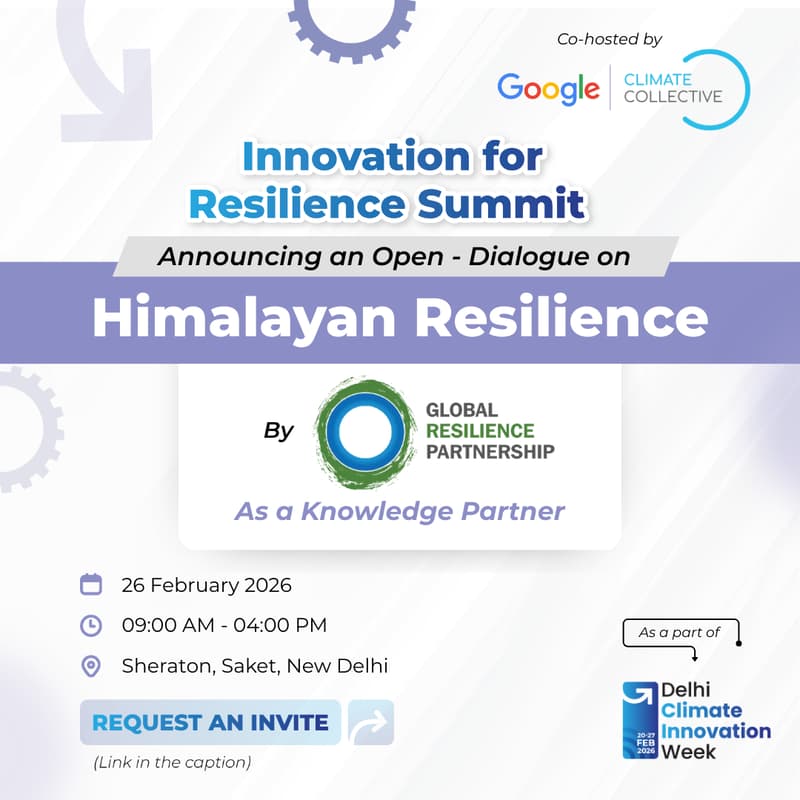

Open Dialogue on Himalayan Resilience
The Hindu Kush Himalaya (HKH) region extends 3,500 km including all or part of eight countries, Afghanistan, Bangladesh, Bhutan, China, India, Myanmar, Nepal, and Pakistan. It is the source of 10 major transboundary Asian river systems – the Amu Darya, Indus, Ganges, Brahmaputra (Yarlungtsanpo), Irrawaddy, Salween (Nu), Mekong (Lancang), Yangtse (Jinsha), Yellow River (Huanghe), and Tarim (Dayan) – and provides water, biodiversity, ecosystem services, and the basis for livelihoods for a population of around 240 million people in the region. The basins of these rivers provide water and other ecosystem services to 1.9 billion people, a quarter of the world’s population.
Between 1985 and 2014, the economic losses resulting from disasters in the Hindu Kush Himalaya (HKH) region already totaled $45 billion. The economic and human costs have mounted in the decade since: as disaster events rise in frequency and intensity. The science is unequivocal: a 2 °C rise and beyond in this region will result in the loss of half the volume of the region’s glaciers and destabilise Asia’s river systems, with enormous downstream consequences for two billion of people – a quarter of the planet’s population.
Many climate risks the region faces are cascading – with impacts in one country to affect lives and livelihoods, wildlife and habitats, across one or more national borders. Climate solutions in the region meanwhile are largely incremental and insufficient to address future risks, particularly at higher warming levels, as noted in the IPCC AR6. We have a narrowing window of opportunity in which to act to strengthen and advance the capacity of people and nature in this ecologically fragile and hugely populated region to navigate change.
There are bright spots - innovation in this region is alive and thriving.
As part of the Innovation for Resilience Summit, GRP and CCF are convening an open-dialogue for Summit attendees to explore how innovation can strengthen resilience outcomes across high-risk sectors. This open dialogue will bring together ecosystem leaders to move beyond problem framing and toward actionable collaboration - shaping credible pathways for innovation, finance, and implementation within India’s resilience agenda
This event is hosted as a part of Delhi Climate Innovation week featuring 200+ events across the week and building powerful network effects for the climate innovation ecosystem.