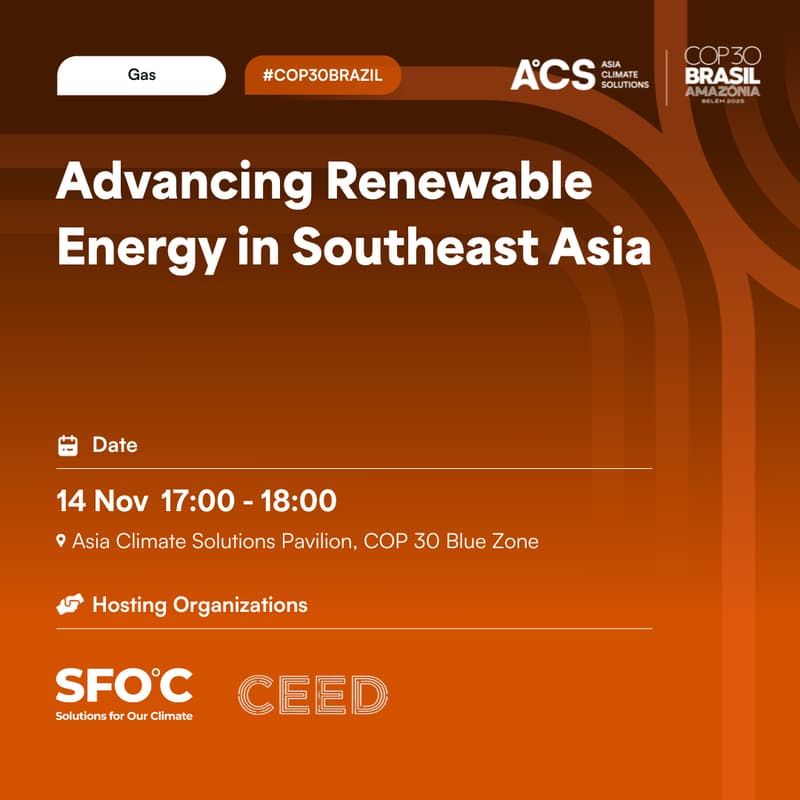

Advancing Renewable Energy in Southeast Asia
Overview
COP28 delivered some of the most historic pledges and decisions in recent years that are now key in ramping up the global energy transition – the call for a transition away from fossil fuels in energy systems, and the goal of tripling the world’s renewable energy capacity by 2030.
Southeast Asia is a region rich in renewable energy, but today it continues to be a global bastion for fossil fuels. While ASEAN nations are signatories to the Paris Agreement and some to the Global Methane Pledge, these commitments are undermined by the widespread expansion of fossil fuel projects, especially fossil gas. Since 2016, a total of 88 GW of new coal and gas capacity has been commissioned across Southeast Asia, more than double the renewable energy (RE) capacity installed during the same period (33.2 GW). With this buildout, SEA endangers its renewable energy transition and climate ambitions – a matter which Southeast Asian movements raised alarm on as world leaders gathered for the 47th ASEAN summit ahead of COP30.
In this panel discussion, we explore the challenges and opportunities in ambitiously transitioning to renewable energy in the region.
Speakers
Avril de Torres, Deputy Executive Director, Center for Energy, Ecology, and Development
Hiroki Osada, Friends of the Earth Japan
Daun Kim, Policy Analyst, Solutions for our Climate
Romil Hernandez, Director for Energy Policy, Institute for Climate and Sustainable Cities
[TBC] Cardinal Pablo David, President, Catholic Bishops Conference of the Philippines / Vice President, Federation of Asian Bishops' Conferences (FABC)