Forest and Friends - February 26, 2026
If you are like me and asking where your invite to February’s Forest and Friends can be found, fret no further. The end of Feb snuck up on us and we’re just getting this week’s event in order, so if you are on the Eastside on Thursday February 26th, join us from 5:00-7:30 at Cascadia Pizza (https://www.cascadiapizzaco.com/bellevue) for some conversation, food and friends. Each month we get together to discuss climate, forests, GIS, and technology in general; come join in the discussion among friends.
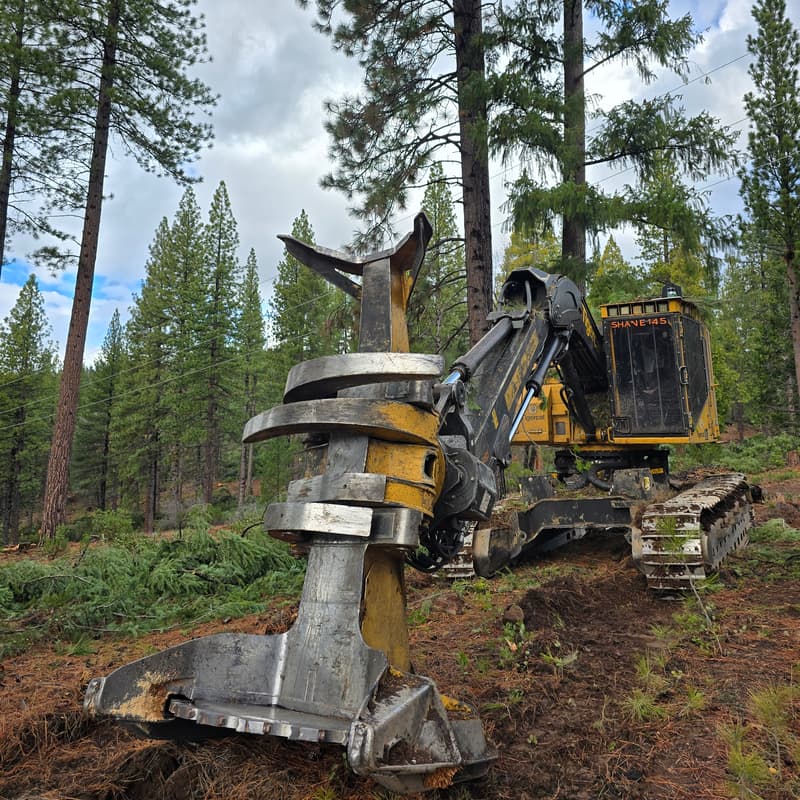
I was in the field earlier this month, just getting out of the Truckee area at the start of the snow and ahead of the subsequent heavy accumulation and avalanches. The work was a little north, in a national forest that has seen about 2M acres of wildfire, in the form of a couple of the largest fires in California’s history, over the last 15 years and folks are afraid of losing the rest of the forest (and their communities) in the next one. I’m tempted to include the post-treatment forest showing the outcome of a fuels reduction project, a more resilient landscape complete with signs of variable burn intensity, but the machine that does the work is important to normalize as well. Fire, like mechanical thinning, picks winners and losers in the forest and if we want big trees in the future we know most of the trees on the landscape have to lose out before the end of that journey. When we used fire to make those selection decisions 150 years ago we’d get a healthy patchwork of clumps and openings, but today’s fire is either immediately suppressed or becomes a run-away cataclysm leaving black sticks in its wake. The mechanical option gives us a chance to reset with less risk of treatment run-away.
In this image we have what is hoped to be a fire resilient stand; a plantation on USFS land in Sierra mixed conifer cut to 60 sq ft per acre. White Fir, Douglas Fir, Ponderosa Pine, Incense Cedar, and Sugar Pine make up the conifers, with Black Oak on this site representing the hardwoods. Across the road in the background you can see the untreated forest – closed in and prone to crown-runs when fire comes. When the crown is burned the fire spreads fast and trees die en masse. The spacing post treatment gives the fire and forest a chance to get back on the ground, where the blackened bark on living trees stand as evidence of survivability when subjected to ground fire.
Please join us for pizza and a pint as we talk about climate! We’ll be geeking out, enjoying the taplist, menu, and friendship while we talk forests, startups, GIS, policy, etc. I’ll be wearing a hardhat and cruising vest – feel free to walk right up and join our table.