
How climate solutions actually gets deployed
If you’ve been following Climate Drift for a while, you know we care a lot about the part of climate solutions that come after the big idea.
Because let’s be honest: it’s one thing to build a promising climate startup. It’s another to get that technology into a factory, a grid, a city, a steel plant, a data center, or a customer’s procurement cycle.
That is where things get real.
The technology has to work. The market has to care. The customer has to move. The capital stack has to make sense. And the founder has to survive the long, weird gap between “this could change everything” and “this is actually being deployed.”
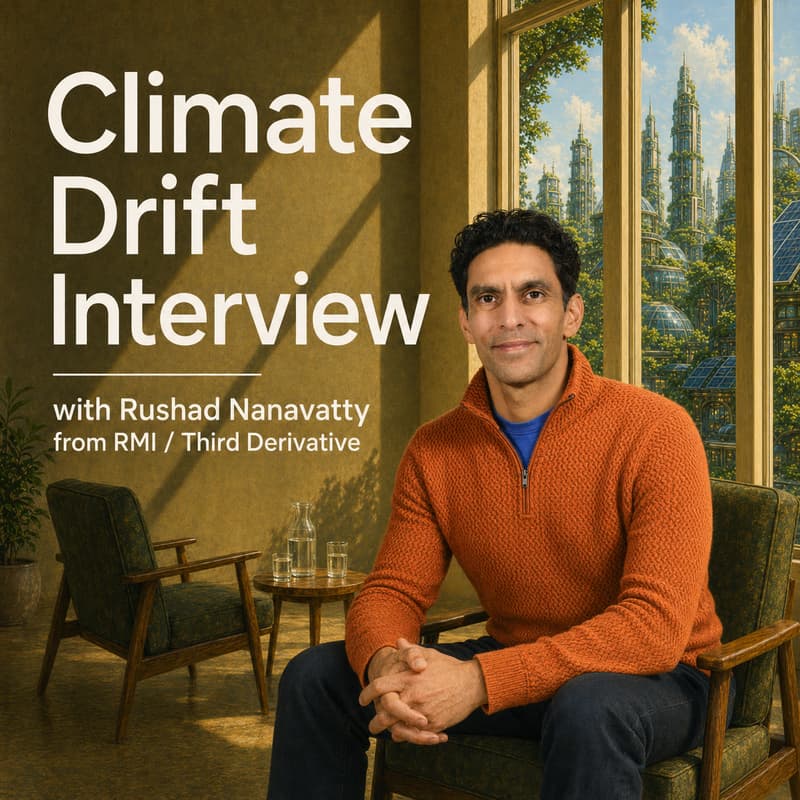
Rushad Nanavatty has spent years working in exactly that gap.
He is Managing Director at Third Derivative, the climate tech accelerator housed at Rocky Mountain Institute. Since 2020, D3 has worked with 286 startups from 26 countries, selected from roughly 3,200 applications. Together, those companies have raised more than $3.8 billion, and over a third have moved into commercial deployment.
So this conversation is about the hard part.
How do climate startups move from science project to commercial company?
What do the best founders understand about customers, corporates, and deployment that others miss?
Where do investors still misunderstand climate tech?
Which markets are more ready than people think?
Climate tech does not scale because a pitch sounds good.
It scales when technology, capital, customers, and timing finally line up.
👉 RSVP now to join us live.
About Climate Drift:
We help operators and investors find their next role in climate — and accelerate the companies building what matters. Through our Accelerator, Firesides, and Open Climate Sessions, we bridge the gap between climate ambition and climate execution.
Learn more about the Community here.