
Conversation: Water & AI: Governance, Innovation, and Justice
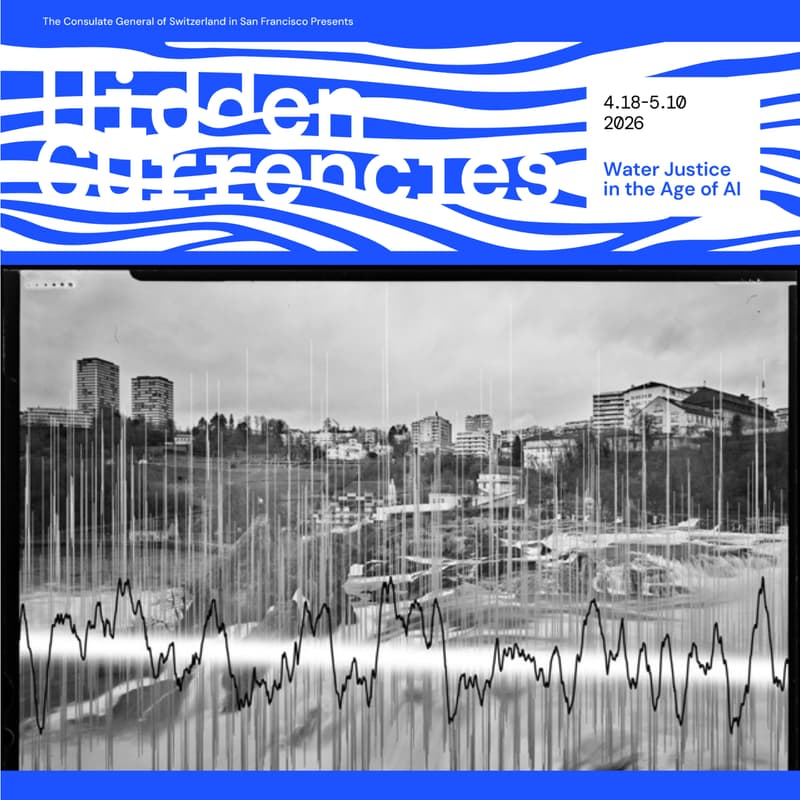
Presented as part of Hidden Currencies: Water Justice in the Age of AI. Explore how emerging technologies are reshaping how water is allocated, treated, and managed. As AI and data centers increasingly factor into decisions alongside cities, farms, and ecosystems, the panel examines both challenges and possibilities for more efficient, transparent, and equitable water systems in Swiss and U.S. contexts.
Featured Speakers
Panelists
Tadesse Kebebew is a Project Manager at the Geneva Water Hub. His research focuses on the protection of water in armed conflict under international law, including international humanitarian law. He currently leads a project analysing the civilian and environmental impacts of attacks on or damage to water systems. He holds a PhD in International Law from the Geneva Graduate Institute.
Suzanne Pierre is a microbial ecologist and biogeochemist working in soil. Her technical expertise includes nutrient and carbon cycling in plant and microbial systems experiencing climate change. She is also the founder and lead investigator of the Critical Ecology Lab – a nonprofit organization researching the intersection of global ecological change, social justice, and liberation of oppressed peoples.
Through her research, Pierre strives to explain the phenomena of global ecological change as responses to systems of global colonialism and capitalism. She speaks and writes about the intersections of identity, liberation, and ecology in publications such as MOLD, Loam, and a forthcoming nonfiction book. She also collaborates with artists and curators to convey these topics through art and exhibitions internationally.
Pierre received a Doctor of Philosophy in Ecology and Evolutionary Biology from Cornell University and an interdisciplinary Bachelor of Arts degree in Environmental Studies from New York University. She also completed a University of California President’s Postdoctoral Fellowship at UC Berkeley. Suzanne Pierre is a 2022 National Geographic Wayfinder Award recipient.
Prof. Meagan S. Mauter is the Principal Investigator of the Water & Energy Efficiency for the Environment Lab (WE3Lab) at Stanford University and the Research Director of the National Alliance for Water Innovation (NAWI), the U.S. Department of Energy’s $235M Energy-Water Desalination Hub. Her research develops innovative computational tools for designing, analyzing, controlling, and adapting water infrastructure systems. Recent projects include WaterTAP (a process systems engineering tool for water system design), FlexWater (a control platform for demand-side energy management at water utilities), and PlanWater (a decision support tool for water treatment capacity expansion under future drought scenarios). Mauter also serves as a Commissioner on the Utilities Advisory Committee for the City of Palo Alto and a consultant to municipalities implementing innovative water treatment and reuse solutions.
Sheena Conforti is a postdoctoral researcher at Stanford University in the Department of Civil and Environmental Engineering, working at the intersection of water, public health, and data-driven surveillance. Her research uses wastewater as a collective signal of population health, enabling the detection and monitoring of pathogens, from respiratory viruses to diseases such as dengue and HIV, without relying solely on clinical testing.
As part of the WastewaterSCAN initiative, she uses molecular and sequencing data to track how pathogens circulate through communities and across regions. She also collaborates with the Stanford Medicine Division of Infectious Diseases and Geographic Medicine to integrate environmental and clinical data, contributing to new approaches for monitoring antimicrobial resistance and infectious disease dynamics.
Sheena earned her PhD from ETH Zurich within the Department of Biosystems Science and Engineering (D-BSSE), in close collaboration with Eawag, where her work focused on environmental surveillance of antimicrobial resistance in wastewater and drinking water systems.
With a background spanning environmental microbiology, genomics, and global health, she is particularly interested in how emerging technologies, from wastewater monitoring to AI-driven analytics, can transform water systems into tools for early warning, transparency, and more equitable public health decision-making.
Moderator
Greg Niemeyer is a data artist and Professor of Media Innovation in the Department of Art Practice at the University of California, Berkeley. A former director and co-founder of the Berkeley Center for New Media, he has helped build an internationally recognized platform for research and public engagement at the intersections of art, technology, and society. For more than three decades, his work has pioneered data-driven art practices that transform complex systems (climate, water, networks, and AI) into shared, experiential forms of understanding.
His impact spans both artistic innovation and cultural inquiry. Niemeyer develops large-scale installations, computational systems, and participatory environments that make invisible forces tangible—from hydrological cycles and atmospheric data to the dynamics of digital platforms. His exhibitions and commissions have appeared internationally at major museums and cultural institutions, supported by foundations, public agencies, and research partners. Across projects, he advances a singular proposition: that data is not merely information, but a medium for collective reflection and civic imagination.
Beyond traditional art forms, Niemeyer imagines bridges across art, science, and public life. He collaborates with scientists, technologists, and fellow artists, including Dr. Chelle Gentemann and musician Jewel to explore how open science, environmental systems, and emerging technologies can invite participation. His work hails audiences to see differently: to recognize the circulations that shape daily life, the ecologies that sustain us, and the futures we are actively constructing.
His message is both urgent and hopeful: Understanding our systems is the first step toward shaping them.
About the Hidden Currencies Series
Presented by the Consulate General of Switzerland in San Francisco, Hidden Currencies explores water as a living medium whose circulation sustains both life and technological innovation. The series highlights connections between Switzerland’s longstanding commitments to water stewardship, diplomacy, and innovation, and the Bay Area’s role as a global hub for research and technology.
The central exhibition features works by six artists whose practices span photography, sculpture, installation, performance, video, and data art: Mark Baugh-Sasaki, Kristiana Chan 莊礼恩, Céline Ducret, Ana Teresa Fernández, Greg Niemeyer, and Annelia Norris (pue leek la').
An adjoining experiential hub features interventions by City Studio (Amy Berk + Chris Treggiari), Ani Moskovyan, Greg Niemeyer, Samuel Wildmann, Tania Claudia Castillo, Candice Mays, and Juana Perfecta. Together, these works invite visitors to reckon with water's hidden presence in everyday life — drawing audiences into direct encounters with the systems, costs, and migrations that water quietly connects.
Curated by Amy Kisch, Founder of AKArt Advisory and Art+Action, the exhibition unfolds as an immersive experience that extends beyond the gallery through a series of interdisciplinary activations bringing together Swiss and U.S. artists, filmmakers, Indigenous knowledge holders, policymakers, scientists, and climate activists to explore water, climate justice, and imagined futures.
This event is presented by the Consulate General of Switzerland in San Francisco in collaboration with AKArt Advisory, EAWAG, Stanford Doerr School Sustainability Accelerator, and Geneva Water Hub, and supported by Presence Switzerland and EAWAG.
For more information or to explore other Swiss events, visit SwissImpact.